cbdMD
Pros
- Broad-spectrum range with wide strength options in every format
- Independent testing stated, with lab results linked from the site
- USA-grown hemp and a GMP manufacturing claim
Cons
- Batch-level certificate lookup not evident from the published material
- GMP is a manufacturing standard, not a product test, and the two are presented together
- Delta-9 and THCV products sold beside the CBD range
What the company sells
| Category | What is in it |
|---|---|
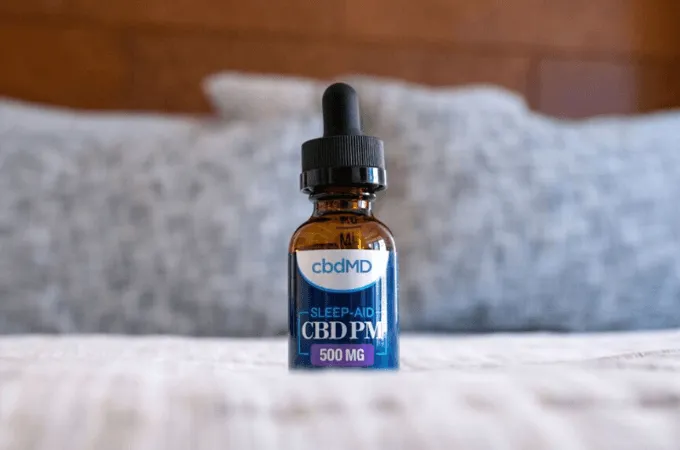
| Swallowed | Gummies, capsules and softgels, tinctures, organised by what they are for: sleep, focus, calm, recovery. |
| Topicals | Creams and rubs, most of which will contain menthol. |
| Pet | A separate pet range. |
| Other cannabinoids | Delta-9 THC and THCV products, sold beside the CBD lines. |
Broad spectrum is the house style
Broad spectrum means the plant’s other cannabinoids and terpenes are kept and the THC is removed in an extra processing step. In principle it is the best of both: whatever the rest of the plant contributes, without the compound that causes problems at work.
In practice "broad spectrum" is not a defined standard, and the extra step is another place for a label to be wrong. What turns it from a claim into a fact is a certificate showing THC as a number, from the batch you have.
The THCV products are worth a note
Tetrahydrocannabivarin is a different molecule from CBD and from THC, and it is the cannabinoid that produced the metabolic result in the one randomised trial people usually misattribute to CBD. It is also investigated as an appetite suppressant. A product containing it is not a stronger CBD product; it is a different thing, and worth reading about before buying.
What the testing says
Checked in September 2026, the company describes its products as independently lab tested and USA grown, with a GMP certification claim and a lab results link in the site footer. GMP is a manufacturing standard rather than a product test, and the two are often presented together as though they were the same assurance.
What could not be confirmed from the published material is whether the certificates can be looked up by the batch code on a specific container. That is the check that matters most, and it is the one this category most often leaves out.
How this review was done
We did not buy these products and send them to a laboratory. Nobody should pretend otherwise, and a review that implies testing it has not done is worth less than no review. What we did instead is check what the company publishes — the certificates, what they cover, whether you can find the one matching the batch in your hand — and read what independent testers found when they bought the products themselves. The score below is for that, and nothing else.
What a certificate should carry
The same five things, on any brand:
- Cannabinoid content, with THC as a number rather than the phrase "THC free".
- Residual solvents left by extraction.
- Heavy metals, which hemp draws readily from soil.
- Pesticides, on an agricultural crop.
- A batch code and a date that match the container you were sent.
The last one is where most brands fall down. A page of laboratory reports is not the same as being able to look up your bottle, and the difference is the whole point of the document.
Sponsorship, and what it is worth
This is a brand that spends heavily on sponsorship, particularly in sport. It is worth stating plainly that sponsorship is marketing: it says a company has a budget, not that a product has been tested, and it has no bearing on the certificates.
For athletes specifically, the relevant facts are elsewhere on this site: CBD is permitted, every other cannabinoid is not, and a brand that also sells delta-9 products is a shop where reading the label matters more than usual.
Reading any CBD brand in five minutes
The same five checks separate every company in this category, and they take about as long as reading a product description.
| Check | What a good answer looks like |
|---|---|
| Can you find the certificate for your batch? | A code on the pack that resolves to a report for that batch, not a page of recent reports. |
| What does the certificate cover? | Cannabinoids with a THC number, plus residual solvents, heavy metals and pesticides. |
| Who tested it? | An independent laboratory, ideally ISO 17025 accredited. That accreditation is about demonstrated competence, not marketing. |
| Milligrams per serving? | Stated per serving, not per container, so two products can be compared at all. |
| What else is in it? | Melatonin, ashwagandha, menthol, caffeine. A blend cannot tell you which ingredient did anything. |
A company that answers all five is not necessarily selling a product that works — nothing on a label can tell you that. It is selling one you can check, which on this shelf is the difference worth paying for.
Who it suits
Somebody who wants broad spectrum specifically, and who likes a range organised by purpose rather than by chemistry. The strength options are wide enough to find a sensible per-serving number rather than taking two of something small.
It suits less well anybody who wants the simplest possible shelf: a shop selling CBD, delta-9 and THCV side by side asks more attention from a buyer than one that sells only CBD.
Verdict
A large, orderly range built on broad spectrum, with testing stated and results linked. It loses ground on the check that matters most — finding the certificate for your own batch — and on a shop layout that puts intoxicating cannabinoids next to the CBD. The score is for what a buyer can verify from outside, not for whether the products work.

Questions people ask
Is cbdMD broad spectrum or full spectrum?
Both. Broad spectrum is the house style — the plant's other compounds kept and the THC removed in an extra step — and full-spectrum products are sold alongside it.
What is THCV and why does cbdMD sell it?
Tetrahydrocannabivarin is a different cannabinoid from CBD and THC. It produced the metabolic result in a 2016 randomised trial that is frequently misattributed to CBD, and it has been investigated as an appetite suppressant.
Does GMP certification mean the product is tested?
No. GMP is a manufacturing standard about how a facility operates. A certificate of analysis is a test of what is in a batch. The two are often presented together as though they were one assurance.
Can I check the lab report for my batch?
Lab results are linked from the site, but whether a specific batch code can be looked up was not evident from the published material when this page was checked.
Sources
- cbdMD product range and testing claims, including broad-spectrum, full-spectrum, delta-9 and THCV lines. Checked September 2026. accessed Sep 18, 2026
- Jadoon KA, et al. Efficacy and Safety of Cannabidiol and Tetrahydrocannabivarin on Glycemic and Lipid Parameters in Patients With Type 2 Diabetes. Diabetes Care. 2016;39(10):1777-1786. accessed Sep 18, 2026
- Bonn-Miller MO, et al. Labeling Accuracy of Cannabidiol Extracts Sold Online. JAMA. 2017;318(17):1708-1709. accessed Sep 18, 2026