G Pen Pro
Pros
- One button, three temperatures, nothing to learn
- 116 by 25 by 24 mm, small enough to forget in a pocket
- Ceramic chamber rather than bare metal
- Low draw resistance and good airflow
- Automatic shut-off after four to five minutes
Cons
- Silicone mouthpiece takes over the taste after the first draw
- Vapour is thin next to a larger device
- Nothing on the body says which colour is which temperature
- Clogs immediately if the grind is coarse
- Battery capacity is not published anywhere we can verify
What the G Pen Pro is
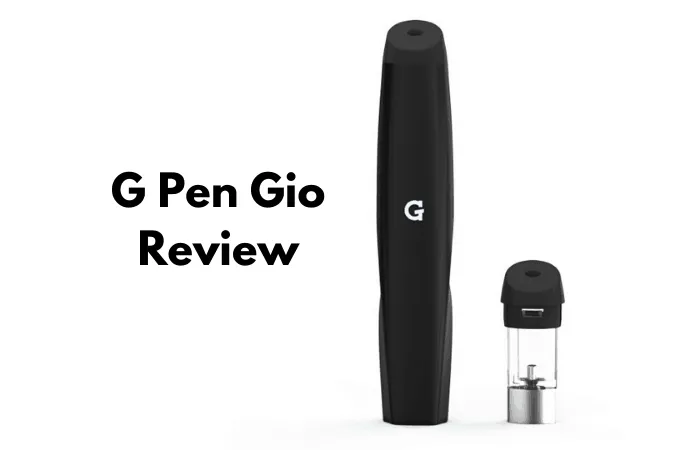
An aluminium tube with a ceramic chamber in it, one button, and four lights on the side. There is no screen, no app and nothing to configure. For a first vaporizer, or for something to keep in a bag and not worry about, it is close to ideal.
The size, in millimetres
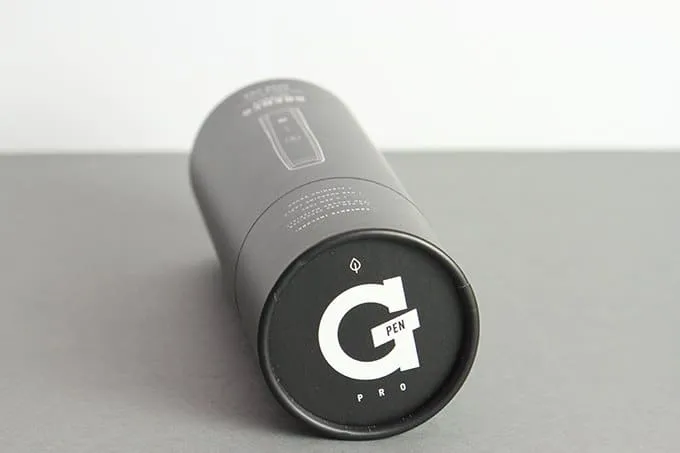
116 by 25 by 24, and lighter than it looks. It goes in a pocket without being a presence there, which is more than can be said for the Elite II. The carrying tube it ships in is a different matter — elegant, and awkward in a bag with a laptop.
One button does everything
Five clicks to turn it on, hold to cycle the temperature, five clicks to turn it off. It also shuts itself off after four to five minutes; the manual says five, the website says four, and our own timing landed between the two.
Three temperatures, by colour
- Blue
- 375 °F, the default. More flavour, less vapour.
- Green
- 400 °F. The setting most people end up on.
- Red
- 428 °F. More vapour, and the harshest.
Nothing on the device tells you which colour is which temperature, so you have to remember. The 25-degree steps are sensibly spaced.
Where those sit in Celsius
191, 204 and 220 °C. Worth knowing because the controlled work on vaporizer efficiency was run at 210 °C, which falls between the green and red settings — so the green setting is a little under the laboratory benchmark and the red one is above it. In that study, devices at the same temperature still differed by 28 percentage points in how much THC they delivered, so the setting is the smaller variable.
The ceramic chamber
Ceramic rather than bare metal, which is the right choice and the reason the pen tastes fine for the first draw. Airflow through it is good and draw resistance is low, so it does not need working at.
A quarter of a gram
About 0.25 g, which is small, and appropriate for a device this size. It is a single-session chamber rather than something to load and carry.
Grind it finely or it clogs
This is the practical thing to know. A coarse grind clogs the mouthpiece after the first pull and you spend the session picking at it. Grind finer than you would for a joint, pack the chamber firmly, and do not overfill it. Our guide to using a grinder covers getting an even grind.
What the vapour is like
Thinner than a larger device produces, and that is a fair trade at this size and price. It is not a cloud machine and it does not pretend to be. What you get is adequate rather than impressive, and consistent when the chamber is packed properly.
The silicone problem
The mouthpiece is silicone, and after the first draw of a session you taste it rather than the flower. It is not subtle and it does not go away with cleaning, because the cause is the material warming up rather than anything on it.
Why a glass mouthpiece matters
Glass, ceramic and stainless steel are inert; warm silicone is not. On a device whose ceramic chamber was chosen precisely so nothing would contaminate the taste, finishing the vapour path in silicone undoes the point. It is a cost decision and it is the one thing that keeps this pen out of the top tier.
What food grade actually certifies
Worth being precise about, because the phrase does a lot of work in this category. Silicone for repeated food contact is covered in the US by 21 CFR 177.2600, and compliance is demonstrated by extraction testing in distilled water and in n-hexane under stated times and temperatures. That is a standard about food touching a surface. It is not a standard about hot vapour being drawn through one, and no part of the regulation claims to be.
Battery and runtime
Around 45 to 60 minutes of continuous heating depending on the setting, and two to three hours to recharge. The capacity is not published anywhere we can find; a figure of 1300 mAh circulates and we have no way to confirm it, so read it as unconfirmed. The four side lights double as a charge indicator, which tells you roughly and not precisely.
The automatic shut-off
Four to five minutes, and it cannot be changed. On a pen this size that is about the right length for a session, and it is the feature that stops it cooking itself in a bag.
Cleaning, and how often
Pop the mouthpiece off and use the supplied brush; it is quick, and doing it every session keeps the draw clear. The chamber is the harder part, particularly if resin has been left in it for a few days. Isopropyl on a cotton bud, and do not leave material in there between uses.
No display, and what that costs
Nothing, most of the time, and a little when you cannot remember what green means. Competing pens at similar money do have a small screen. Whether that is worth anything depends on whether you are the kind of person who will ever change the temperature twice in one session.
What we scored it, and why
Four out of five. It does what it sets out to do, it is easy for a beginner, it is small, and it survives being carried about. The missing point is the mouthpiece, which is the only thing on it that a better material would fix outright.
Against the Elite II
| G Pen Pro | G Pen Elite II | |
|---|---|---|
| Chamber | Ceramic, about 0.25 g | Full ceramic, about 0.5 g |
| Heating | Conduction | Conduction with convection boost |
| Temperatures | Three, fixed | Set to the degree |
| Controls | One button, four lights | Colour screen, three buttons |
| Mouthpiece | Silicone | Zirconia |
| Runtime | 45 to 60 minutes | About 60 minutes |
What the old review claimed
The previous version of this page ended by telling medical patients the pen was effective for pain. We do not write that sentence any more and it should not have been written then: it is a health claim about a piece of hardware, and nothing about a vaporizer supports it. This is educational content, not medical advice.
Who it suits
- A first vaporizer, where simplicity is worth more than specification.
- Anyone who wants something small enough to forget is in a pocket.
- Anyone who loads a quarter-gram at a time and no more.
Who should look elsewhere
- Anyone who cares about flavour through a whole session, who wants the Elite II and its zirconia mouthpiece.
- Anyone wanting dense vapour, which is not what a pen this size does.
- Anyone unwilling to grind finely, because this one punishes that immediately.
Verdict
Four out of five, and the missing point is the mouthpiece. As a first vaporizer the G Pen Pro is hard to argue with: it is small, it is cheap, there is one button, and the ceramic chamber means the first draw of a session tastes like flower. Then the silicone warms up and you taste the silicone instead. Everything else here is a reasonable trade for the size and the money; that one is a material choice, and it is the reason to spend more on the Elite II if flavour is why you are buying a vaporizer at all.

Questions people ask
What temperature does the G Pen Pro run at?
Three fixed settings shown by colour: blue is 375 °F, green is 400 and red is 428, or 191, 204 and 220 °C. Nothing printed on the device tells you which is which, so you have to remember. Green is where most people settle.
Why does my G Pen Pro taste like plastic?
It is the silicone mouthpiece warming up, and it is the main weakness of the device rather than anything you have done. Cleaning will not change it, because the cause is the material rather than residue on it. The first draw of a session is unaffected; it is the ones after that.
Why does the G Pen Pro clog?
Almost always because the flower was ground too coarsely. A coarse grind blocks the narrow mouthpiece on the first pull and you spend the rest of the session picking at it. Grind finer than you would for a joint, pack the chamber firmly and do not overfill it.
How long does the G Pen Pro last on a charge?
Around 45 to 60 minutes of continuous heating depending on which setting you use, and two to three hours to recharge. The cell capacity is not published by the manufacturer; a figure of 1300 mAh circulates online and we have not been able to confirm it, so we do not state it as fact.
Sources
- Lanz C, Mattsson J, Soydaner U, Brenneisen R. Medicinal Cannabis: In Vitro Validation of Vaporizers for the Smoke-Free Inhalation of Cannabis. PLoS One. 2016;11(1):e0147286. accessed Sep 18, 2026
- Meehan-Atrash J, Luo W, Strongin RM. Toxicant Formation in Dabbing: The Terpene Story. ACS Omega. 2017;2(9):6112-6117. accessed Sep 18, 2026
- 21 CFR 177.2600 — Rubber articles intended for repeated use. US Food and Drug Administration, Code of Federal Regulations. .gov accessed Sep 18, 2026