What has been measured directly
In 2018 a group in Brazil published a randomised, double-blind, placebo-controlled crossover study in Frontiers in Pharmacology, giving healthy volunteers 300 mg of CBD and recording them overnight in a sleep laboratory with polysomnography — the full electrode setup that measures sleep rather than asking about it.
Nothing moved. Total sleep time, sleep efficiency, sleep onset latency, the proportion of each sleep stage and the number of awakenings were all indistinguishable from placebo. The authors were explicit that a single 300 mg dose did not alter the sleep-wake cycle of healthy subjects.
Healthy volunteers are the limit of that result. People who sleep normally have little room to improve, so a null finding in them does not prove nothing would happen in insomnia. It does mean the one time anyone measured CBD against the instruments that define sleep, the instruments saw nothing.
The number everyone quotes
The optimistic figure circulating on this topic — roughly two thirds of people sleeping better — comes from a 2019 case series in The Permanente Journal. Seventy-two adults were given CBD in a psychiatric clinic; sleep scores improved in 66.7% of them in the first month.
Read the second half of that sentence too. The same paper notes the sleep scores fluctuated over time, while the anxiety scores it also tracked held steadier. And the design does most of the work:
- No control group. Nobody received a placebo, and sleep is unusually responsive to expectation.
- Self-reported. Sleep questionnaires and sleep laboratories routinely disagree, which is the whole reason the study above used electrodes.
- People arrive at a clinic at their worst, and worst points tend to be followed by better ones whatever is done.
What is in a sleep product besides CBD
This is the part that changes how the whole category should be read. Look along a shelf of CBD sleep products and count how many are CBD alone.
| Common second ingredient | What it is, and what that means for judging the product |
|---|---|
| Melatonin | A hormone that signals biological night. It has a real and well-studied effect on sleep timing, which is why it is used for jet lag and shift work. American sleep medicine guidance is notably cool on it for chronic insomnia, but it is doing something, and it is not the CBD. |
| CBN | A cannabinoid formed as THC degrades, marketed as sedating on very thin evidence. Its reputation comes largely from old material where the sedation tracked the age of the cannabis rather than the CBN. |
| L-theanine | An amino acid from tea leaves with its own small literature on relaxation. |
| Ashwagandha | An adaptogenic herb with its own trials in stress and sleep, entirely separate from anything cannabis-related. |
| 5-HTP or GABA | Precursor and neurotransmitter respectively, each with their own claims and their own literature. |
A product with four active ingredients that seems to work has told you nothing about which of the four did it. That is not an argument against buying one. It is an argument against concluding anything about CBD from having bought one.
What a sleep laboratory measures
The reason the 2018 study carries more weight than the case series is not its size. It is that polysomnography measures things a person cannot report about themselves.
| Measure | What it is |
|---|---|
| Sleep onset latency | How long from lights out to actually asleep. People routinely misjudge this by half an hour in both directions. |
| Sleep efficiency | Time asleep as a share of time in bed. The number sleep medicine works on hardest, because it is the one behaviour changes move. |
| Wake after sleep onset | Time awake in the night. Brief awakenings are normal and are usually not remembered at all. |
| Sleep architecture | How the night divides between light sleep, deep slow-wave sleep and REM, and in what order. |
A product can change how a night feels without changing any of those, and it can change one of them without the sleeper noticing. That gap is the whole reason a null result under electrodes sits above a positive result on a questionnaire, and the reason "I slept better" and "my sleep improved" are not the same claim.
What THC does to sleep
CBD is not the cannabinoid with the sleep literature. THC is, and what it shows is more complicated than the reputation.
- It suppresses REM sleep, the stage in which most dreaming happens, which is why heavy users often report they do not dream.
- Tolerance develops to the sedating effect, so the amount that settled someone at the start stops doing it.
- Stopping produces a rebound: vivid dreams and disturbed nights are among the best-documented features of cannabis withdrawal, and they are the reason quitting feels like it made sleep worse.
That matters on a CBD page for one practical reason. Full-spectrum products carry a trace of THC, and the labelling studies keep finding products whose THC content was not what the label said.
What sleep medicine does instead
Chronic insomnia has a first-line treatment, and it is not a pill. Cognitive behavioural therapy for insomnia — sleep restriction, stimulus control, and unpicking the beliefs that keep people awake — is what sleep medicine reaches for first, ahead of medication, on trial evidence that runs to decades.
It is worth naming on a page like this because it is unglamorous, it is not sold in a bottle, and it outperforms everything that is. The practical parts of it are also the least controversial advice in the whole field:
- One wake time, every day. Anchoring the morning does more than anything done at night.
- Bed is for sleep. Out of it when properly awake, back when sleepy.
- Cut the time in bed to the time asleep, then extend it as sleep consolidates.
- Light in the morning, less of it at night.
What CBD does at the doses people take
The dose in the sleep-laboratory study was 300 mg in a single sitting. Most products sold for sleep deliver between 10 and 50 mg a serving. That gap is worth holding in mind whenever a result from a trial is used to sell something: the trial was not testing what is in the jar.
The other reason it matters is that CBD does not behave in a straight line. Where doses have been compared directly, in anxiety, the middle dose did something the highest one did not. Assuming that more is a stronger version of the same thing is the mistake this compound punishes most often.
Carried across from the earlier version of this page so the formats can be compared side by side. These are not recommendations: we have not tested them, and the details on each need checking against current listings before anyone acts on them.
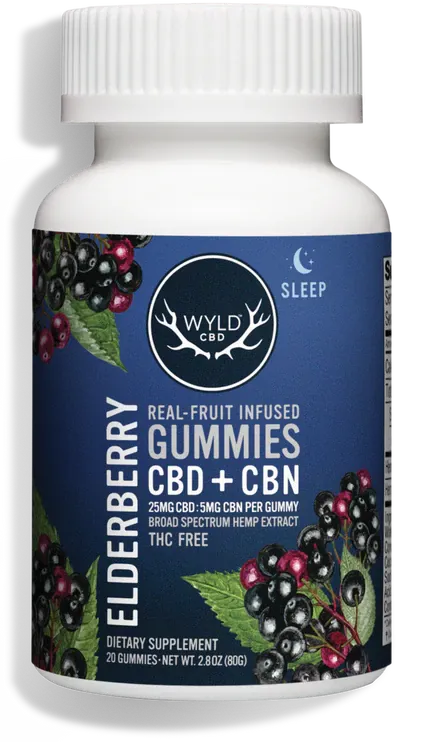
Wyld CBD
Wyld CBD + CBN Elderberry Gummies
Budget
- 25mg CBD + 5mg CBN per gummy
- Broad-spectrum, US-grown hemp
- Elderberry, made with real fruit extract
- Organic and vegan
Made in Oregon from broad-spectrum extract and real fruit, and third-party lab tested. Every gummy pairs 25mg of CBD with 5mg of CBN, so anything you notice cannot be attributed to the CBD on its own. The same company sells THC edibles under the Wyld Canna name; this is the hemp line. It carried a 4.5 rating across 582 reviews when the original page was written in 2022.
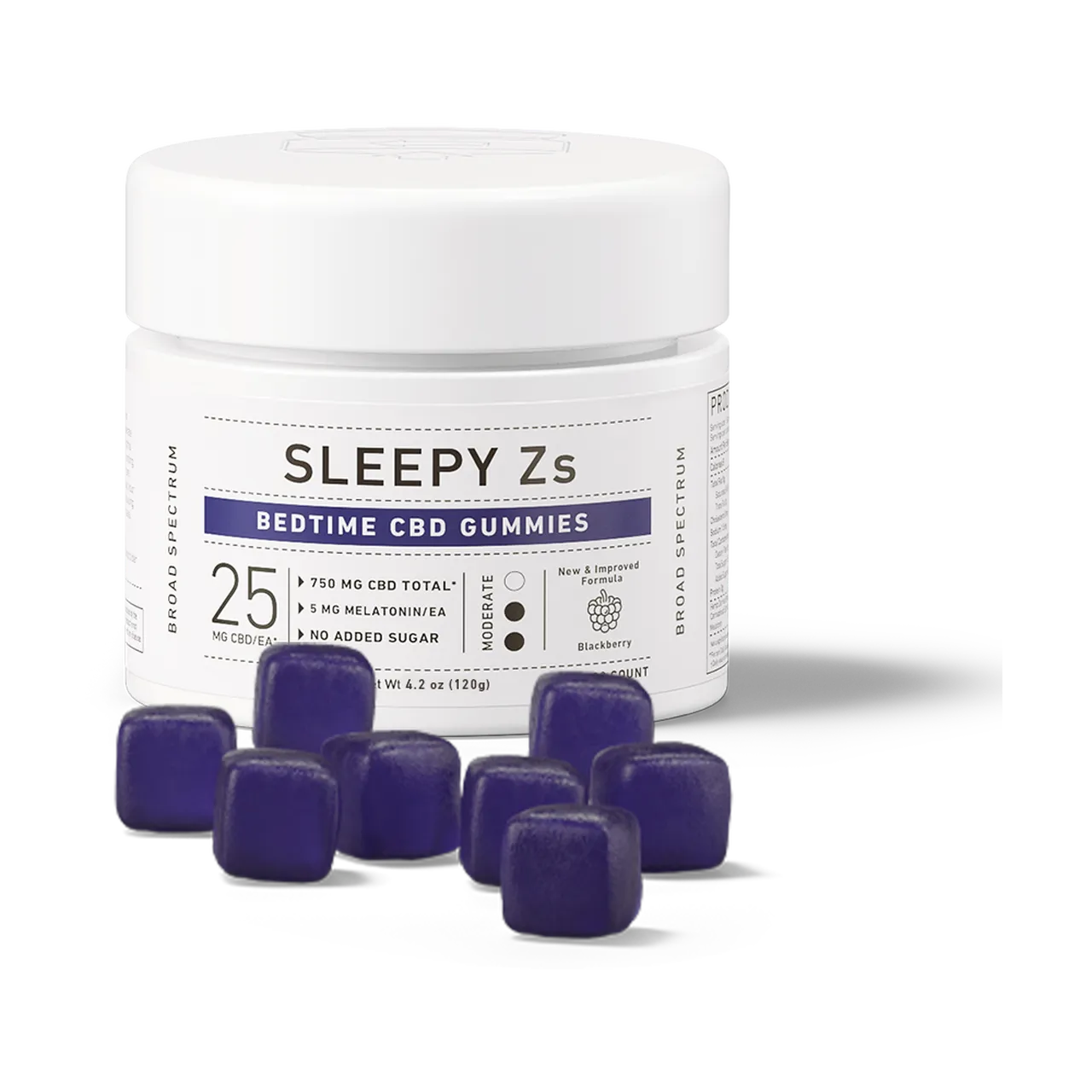
Green Roads
Green Roads Sleepy Zs Gummies
Mid-range
- 25mg CBD + 5mg melatonin per serving
- Pharmacist formulated
- Independently lab tested
- Vegan, gluten free, no added sugar
Blackberry flavoured, formulated by a pharmacist and tested by an independent lab. The melatonin is the part with the established evidence behind it for sleep timing; at 5mg a serving it is doing work the CBD is not, which is worth knowing before you attribute anything to the cannabinoid.
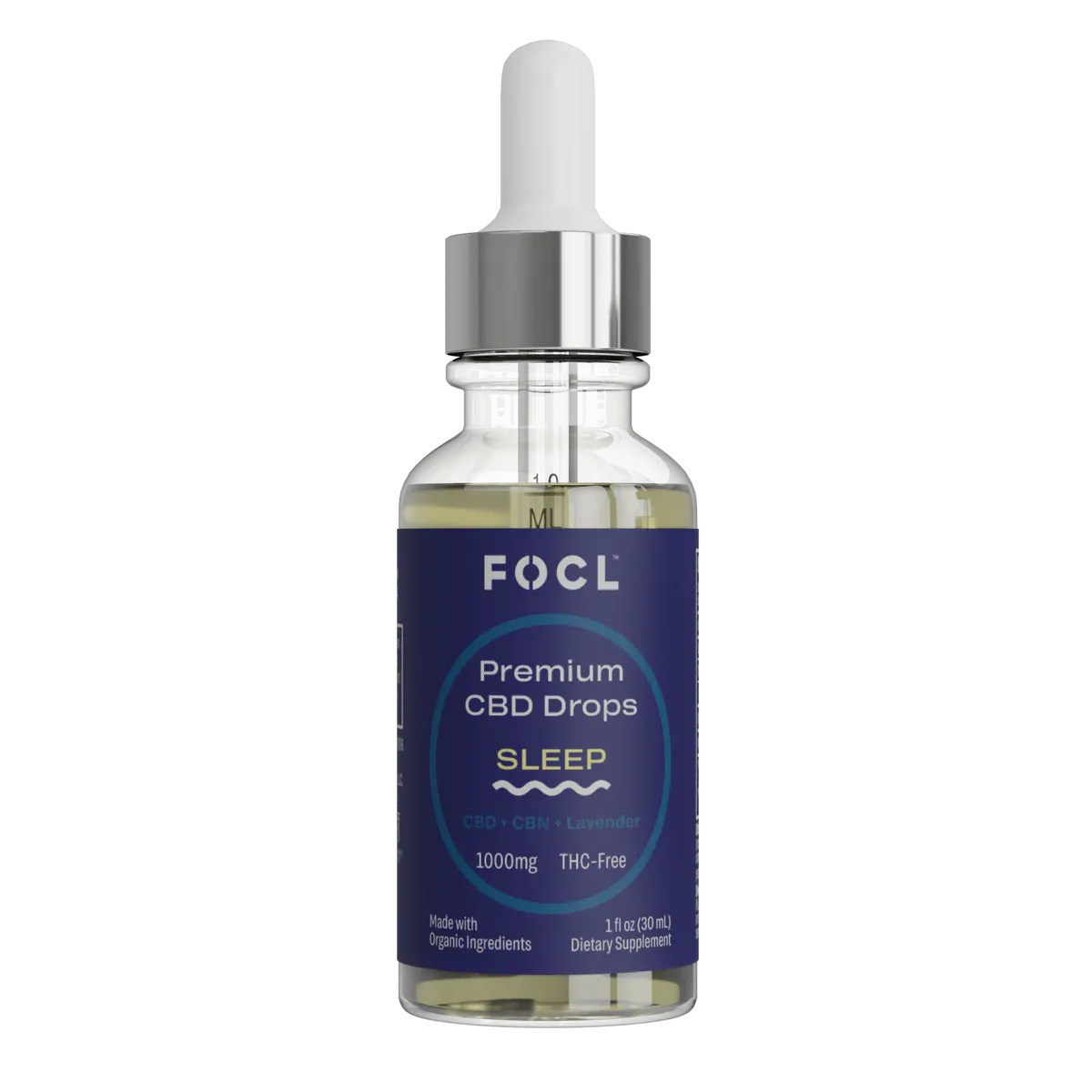
FOCL
FOCL Sleep Drops
Premium
- Organic CBD + CBN
- Doctor formulated
- Third-party tested for purity
- GMP-certified, food-grade facility
Organic CBD and CBN in a sublingual oil, which is the fastest of the formats on this page: held under the tongue it bypasses the liver, so it arrives in 15 to 45 minutes rather than the one to two hours an edible can take. Plant-based, grown without pesticides or herbicides, and third-party tested.
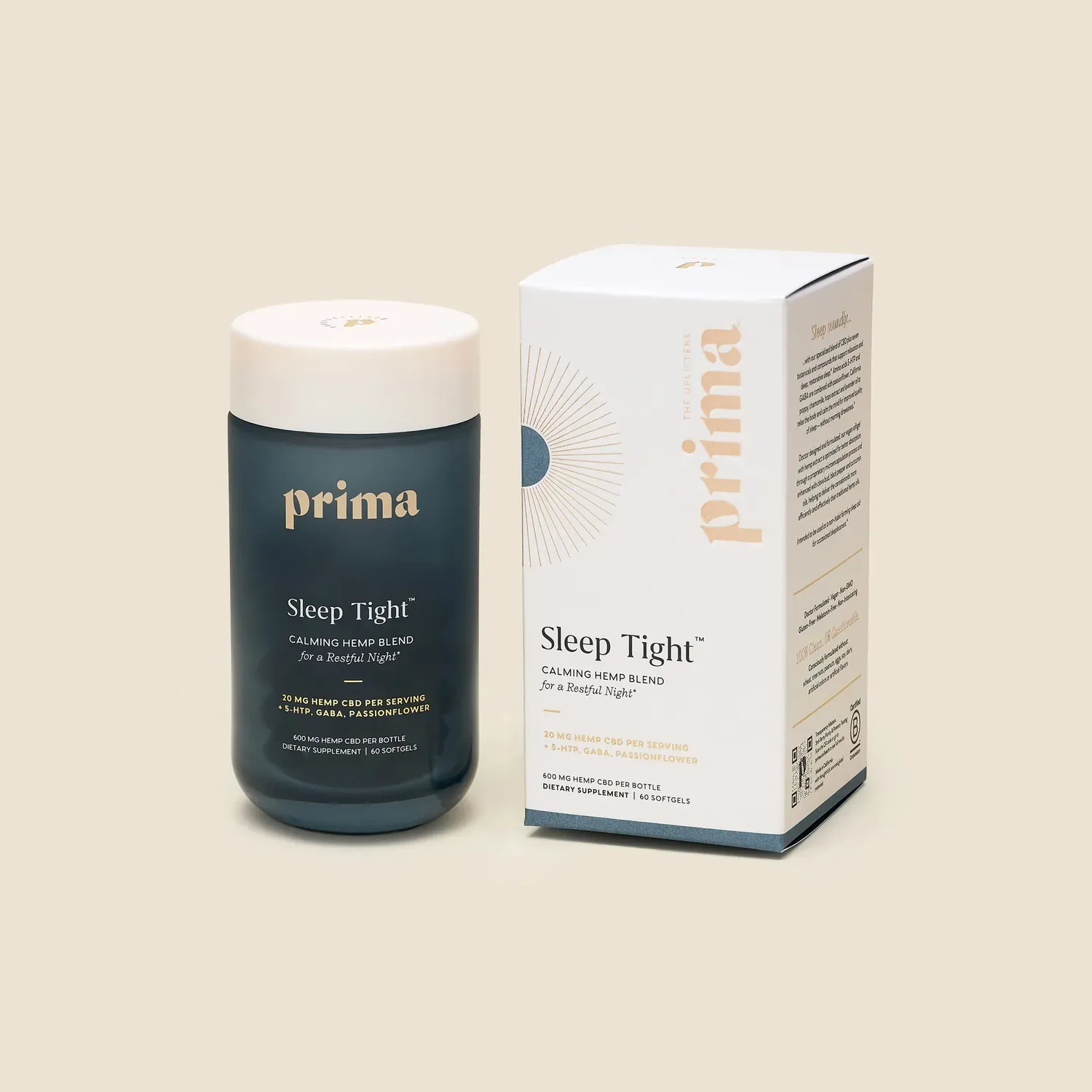
Prima
Prima Sleep Tight Softgels
Mid-range
- 20mg CBD per serving
- Melatonin free
- With 5-HTP, GABA and calming herbs
- Whole hemp extract
The one product here with no melatonin in it. Instead the blend carries 5-HTP and GABA alongside California poppy, lavender and passionflower extract, so it is a multi-ingredient supplement rather than a CBD product: six active ingredients means six things it could be, and no way to tell which from the label. Doctor formulated, 20mg of CBD per dose, from organically grown whole hemp extract.
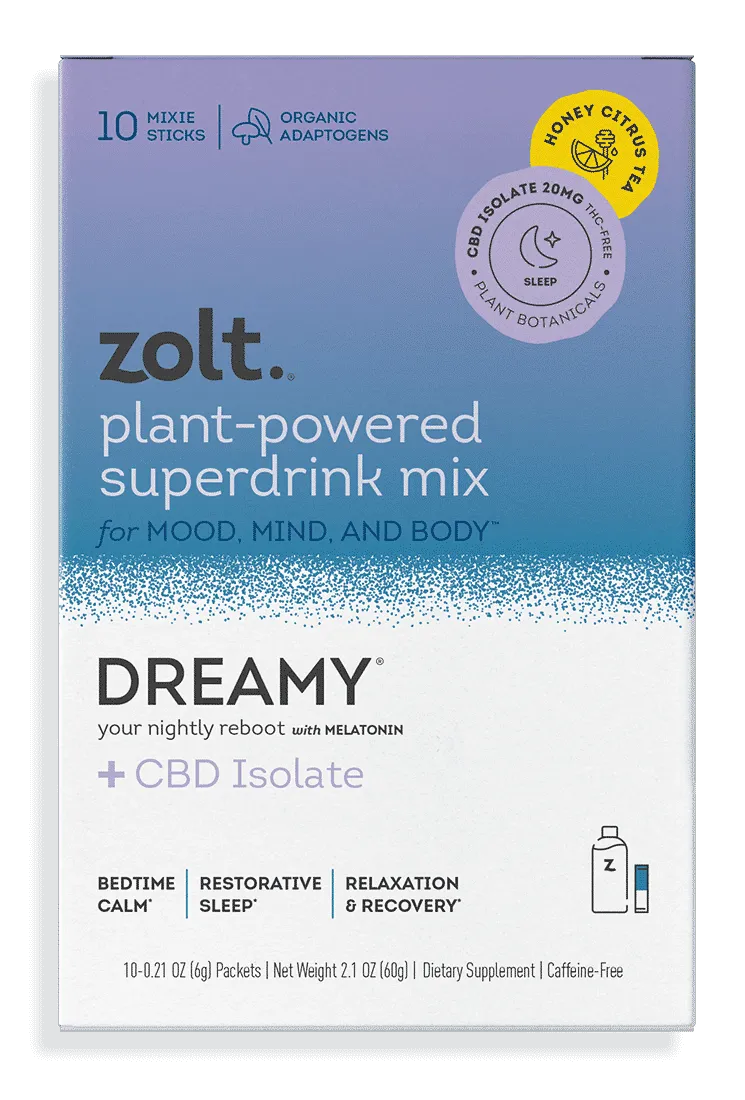
Zolt
Zolt Dreamy CBD Isolate
Budget
- 20mg CBD per serving, no THC
- CBD isolate, not full spectrum
- With ashwagandha and other adaptogens
- Caffeine free, lab tested with CoA
A powder stirred into water rather than something you swallow whole. It is isolate, so the CBD is on its own with no other cannabinoids and no THC — the cleanest read on this page if CBD is what you are actually trying to assess, except that the blend also carries adaptogens including ashwagandha. Made in the US from farm-grown hemp using a subzero extraction process, in facilities meeting cGMP, SQF and FDA standards. Zolt donates 1% to the National Young Farmers Coalition.
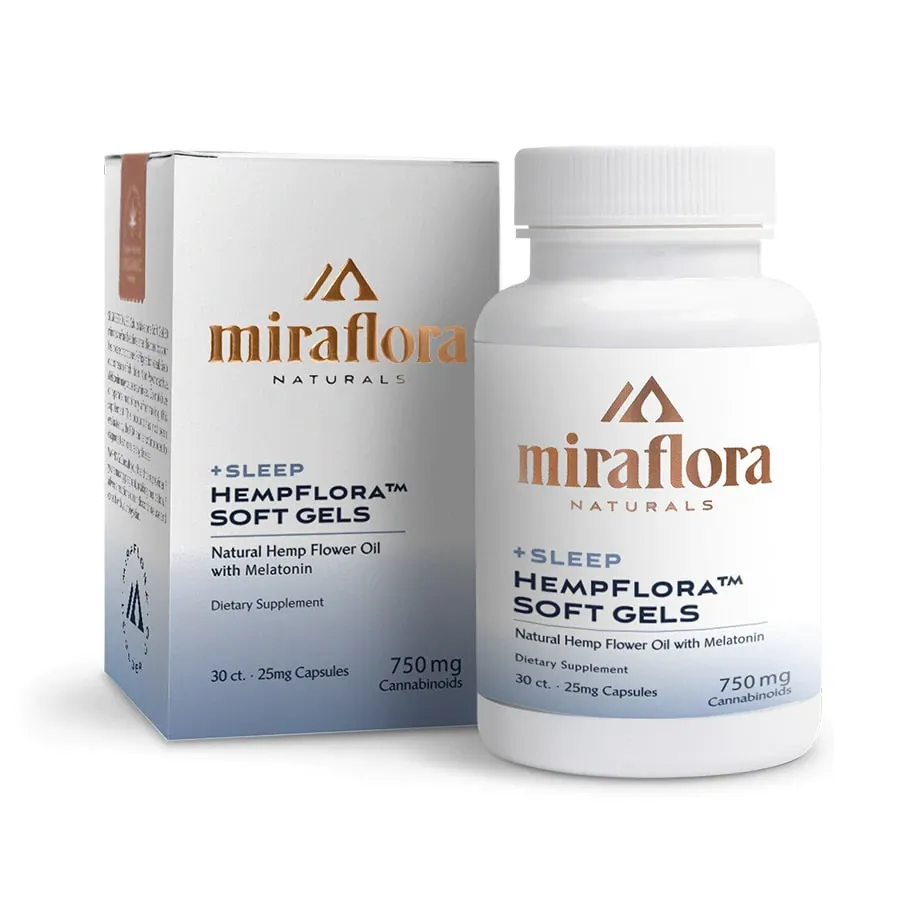
Miraflora Naturals
Miraflora Hempflora Soft Gels
Premium
- Full spectrum, hand pressed
- Single hemp source
- With melatonin
- Lab tested
Full-spectrum softgels from a single hemp source, hand pressed and lab tested. Melatonin is in the blend. Full spectrum means the other cannabinoids and terpenes come with it, including a trace of THC under the legal limit — the opposite end of the scale from the Zolt isolate above.
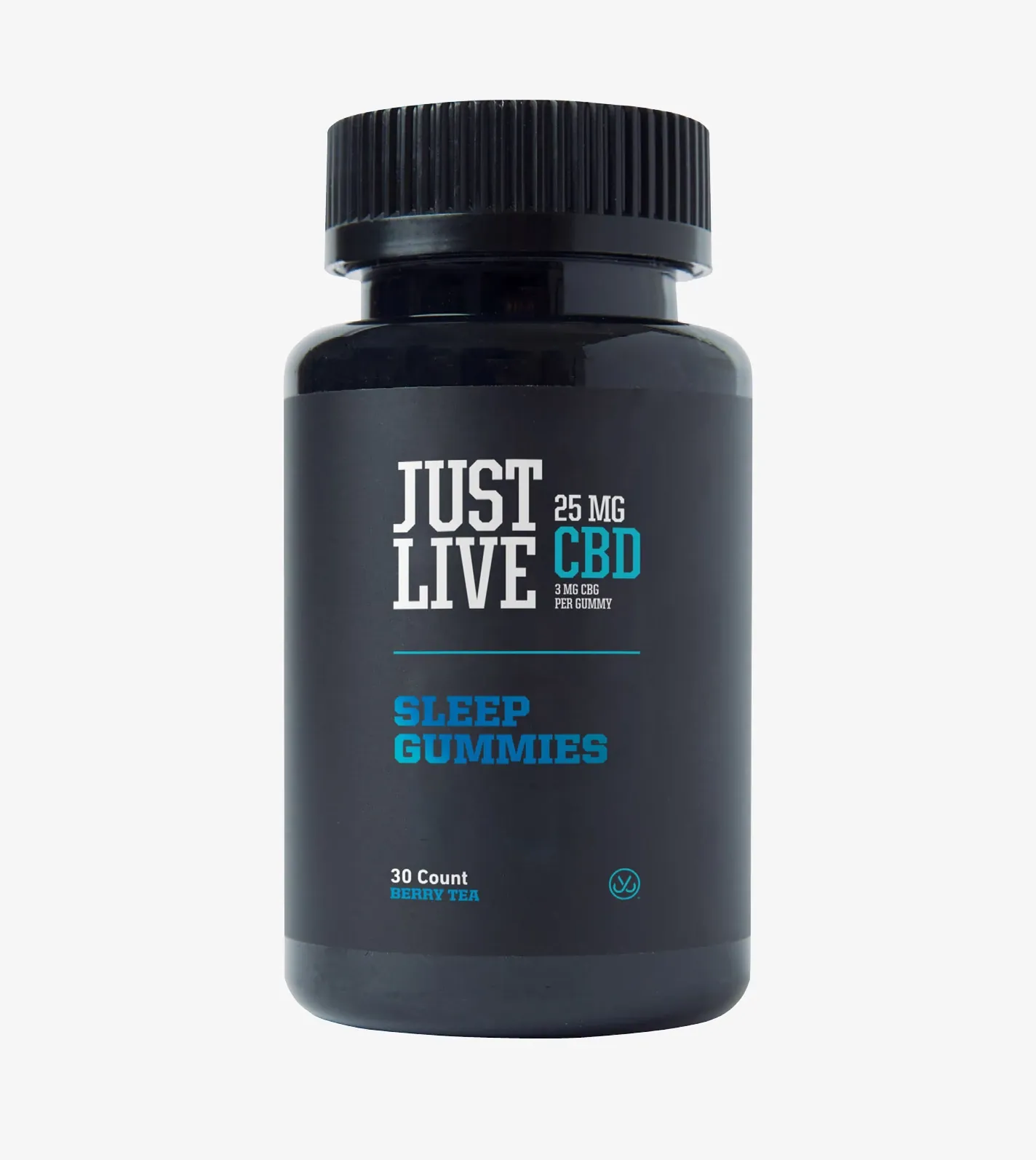
Just Live
Just Live Sleep CBD Gummies
Mid-range
- 25mg CBD + 3mg CBG per serving
- Made in the USA
- Traceable seed to sale
- Third-party certified for purity and potency
The second cannabinoid here is CBG rather than the CBN or melatonin most of this list uses, and at 3mg it is a small fraction of the 25mg of CBD. Just Live publishes a seed-to-sale trace and third-party certificates for purity and potency, which is more than several brands on this page do.
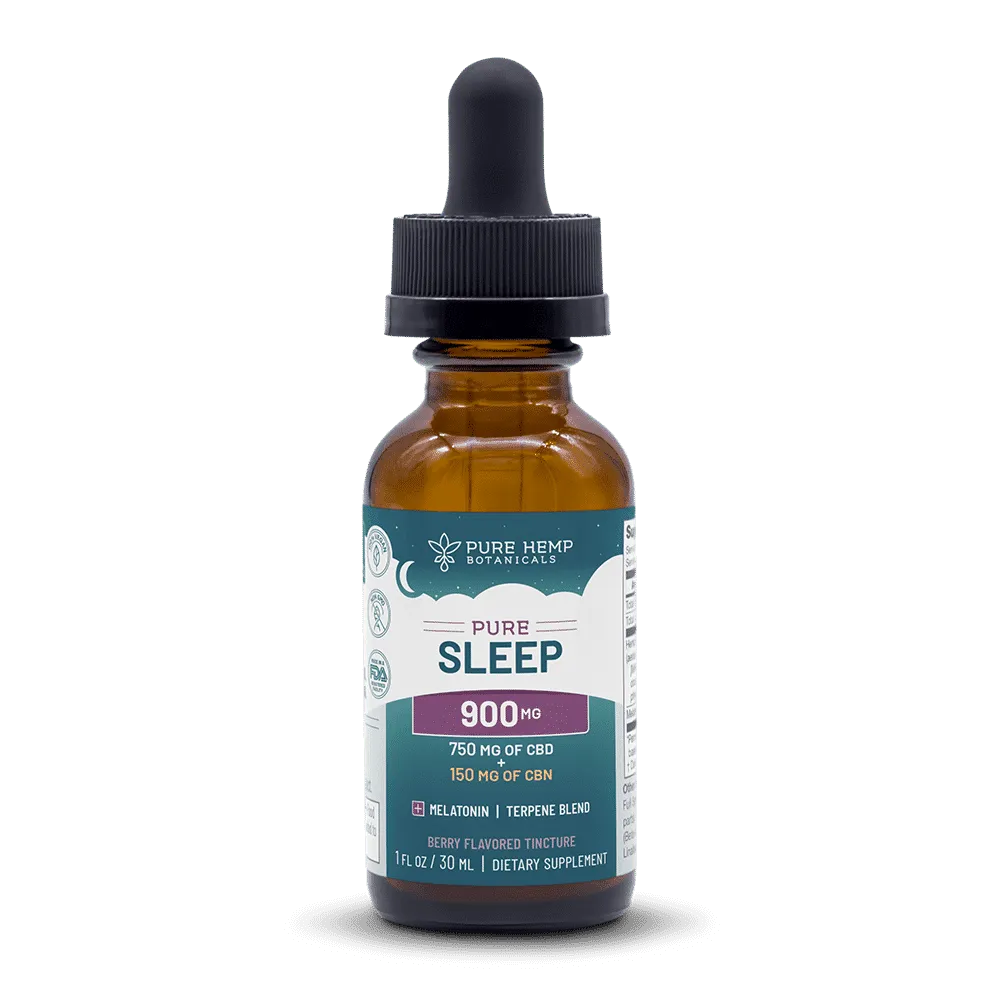
Pure Hemp Botanicals
Pure Hemp Botanicals Pure Sleep Tincture
Mid-range
- 750mg CBD + 150mg CBN per bottle
- 2mg melatonin
- Full spectrum hemp extract with terpenes
- Sublingual dropper
Note that the headline numbers are per bottle, not per serving — the thing worth checking on every product on this page. A 5:1 ratio of CBD to CBN across the bottle, plus 2mg of melatonin. Full-spectrum extract, taken under the tongue, so it reaches you faster than the capsules and gummies here.
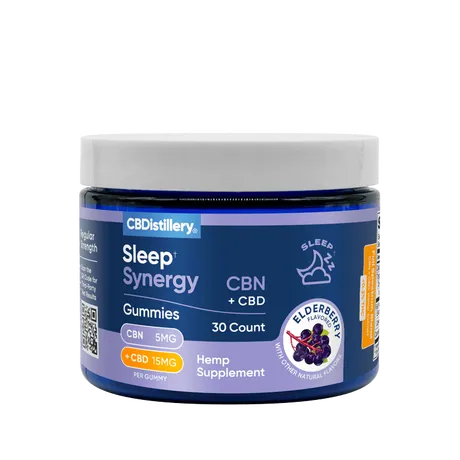
CBDistillery
CBDistillery Sleep Synergy Gummies
Mid-range
- 1:3 CBN to CBD ratio
- 30 gummies, 20mg per serving
- Full spectrum, under 0.3% THC
- Elderberry flavoured
The highest proportion of CBN on this page: one part CBN to three parts CBD, rather than the 1:5 the others run. Full spectrum, so the other cannabinoids, flavonoids and terpenes are present along with less than 0.3% THC. Thirty elderberry gummies at 20mg a serving.
Reading a label without being taken in
A 2017 analysis in JAMA bought 84 CBD extracts online and tested them; around seven in ten were inaccurately labelled, and some held undeclared THC. On a sleep product that matters twice over, because THC alters sleep architecture in its own right.
| What to look for | Why it matters |
|---|---|
| Milligrams per serving, not per bottle | The number on the front is usually the whole container. |
| What else is in it, with amounts | Melatonin, CBN, 5-HTP and ashwagandha all do something. If they are listed without amounts, the product cannot be compared with anything. |
| Spectrum: full, broad or isolate | Full spectrum carries a trace of THC. Broad spectrum removes it. Isolate is CBD alone, which is what the studies used. |
| A batch certificate of analysis | Matching the batch code printed on your container, recently dated. |
The products this page covers

Questions people ask
Does CBD make you sleepy?
In the one randomised crossover study that recorded healthy adults overnight with polysomnography, 300 mg of CBD produced no change in any sleep measure against placebo. Sleepiness is, separately, a common side effect reported in the high-dose epilepsy trials.
Is it the CBD or the melatonin?
On most products sold for sleep it cannot be told apart, because they contain both. Melatonin has a real effect on sleep timing and its own literature; a blend that works has not told you which ingredient worked.
What is CBN and does it help sleep?
CBN is a cannabinoid formed as THC degrades. Its sedating reputation comes largely from old cannabis, where the sedation tracked the age of the material rather than the CBN, and it has very little trial evidence of its own.
What works for insomnia if this does not?
Cognitive behavioural therapy for insomnia is what sleep medicine reaches for first, ahead of medication, on decades of trial evidence. A fixed wake time, keeping the bed for sleep and cutting time in bed to time asleep are the parts of it anyone can start with.
Sources
- Linares IM, et al. No Acute Effects of Cannabidiol on the Sleep-Wake Cycle of Healthy Subjects: A Randomized, Double-Blind, Placebo-Controlled, Crossover Study. Front Pharmacol. 2018;9:315. accessed Sep 18, 2026
- Shannon S, et al. Cannabidiol in Anxiety and Sleep: A Large Case Series. Perm J. 2019;23:18-041. accessed Sep 18, 2026
- Babson KA, Sottile J, Morabito D. Cannabis, Cannabinoids, and Sleep: a Review of the Literature. Curr Psychiatry Rep. 2017;19(4):23. accessed Sep 18, 2026
- Bonn-Miller MO, et al. Labeling Accuracy of Cannabidiol Extracts Sold Online. JAMA. 2017;318(17):1708-1709. accessed Sep 18, 2026