What kief actually is
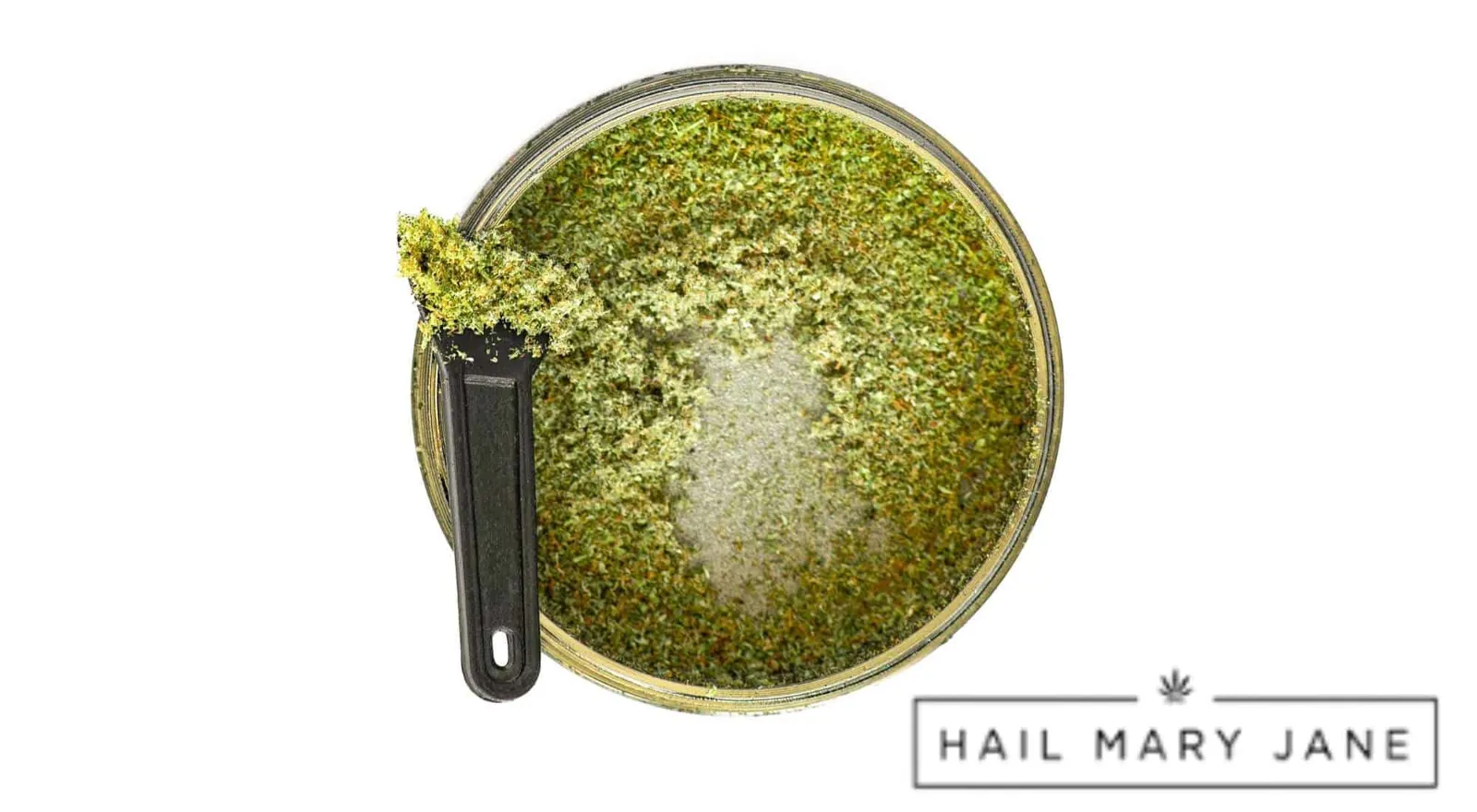
California defines it precisely, and the definition is the most useful sentence written about it anywhere: kief is the resinous trichomes of cannabis that have been separated from the cannabis plant. Not powder, not dust, not a by-product. It is the resin glands, taken off the flower and collected.
The law calls it a concentrate
And this is the part that decides the amounts. The same regulations file kief under cannabis concentrate: cannabis that has undergone a process to concentrate one or more active cannabinoids, thereby increasing potency. The list it sits on includes extracts, vape cartridges and shatter. Legally, kief is closer to those than to the bud it came from.
Nobody measures out shatter by the pinch. The reason people misjudge kief is that it looks like flower and is classed like an extract.
How big a trichome head is
Punja and colleagues photographed and measured them: glandular heads run 40 to 110 micrometres across, averaging 75 to 90 at six weeks, on stalks 300 to 500 micrometres long. That size range is why a 75-micron screen catches the resin and holds back the leaf, and it is the number to look for on a grinder.
Why your kief is green
Because the screen let leaf through with it. Blonde kief is mostly resin heads; green kief is resin plus plant matter, and it is weaker by the proportion of green in it. This is the single biggest reason two people quoting amounts disagree: they are not talking about the same material. Our grinder guide covers micron ratings.
The one rule for amounts
Start at a quarter of the volume you would use in flower and adjust from there. Blonde kief sits at the strong end of that, green kief at the weak end. There is no universal figure, because kief from a four-piece grinder and kief from a sieve are different products.
On top of a bowl
The commonest use and the easiest to overdo. A light dusting over packed flower, not a layer. Kief melts before it burns, so a thick cap runs down into the bowl and clogs it, and the first pull takes most of it. Pack the flower normally, then add a fraction of what looks right.
Rolled through a joint
Mixed through ground flower rather than sprinkled in a stripe, or it burns unevenly and canoes. The regulator allows this in a commercial product too: a pre-roll may lawfully be any combination of flower, shake, leaf or kief. A kief coating on the outside of a joint is a different trick and mostly a visual one.
In a vaporizer
Works, and needs a barrier. Loose kief falls straight through most chambers and on to the heating element. A concentrate pad, or a layer of flower underneath it, solves that. Run it cooler than you would flower, because there is no plant matter buffering the heat.
Pressed into rosin
The best use of a large amount, and the one that rewards blonde kief specifically. Heat and pressure melt the resin out of the heads and leave the debris behind, which is why green kief presses badly and pale kief presses well. What comes out is a solventless concentrate.
In coffee or tea, mostly not
Two problems, and both are chemistry rather than taste. Raw kief is mostly acid-form cannabinoids and has not been decarboxylated, and cannabinoids do not dissolve in water. Stirring kief into a black coffee gets you gritty coffee. Add fat, or do not bother.
Making kief butter
The same two steps as any infusion, and kief makes it easier because there is so little plant matter to strain out afterwards. Decarboxylate first, then hold it in warm butter. The ratio is where people go wrong: kief butter made at flower ratios is several times stronger than intended.
What the kinetics study found
On the decarboxylation step, Wang and colleagues ran extracts at 80, 95, 110, 130 and 145 °C for up to an hour. The conversion follows first-order kinetics, THCA-A converts at about twice the rate of CBDA and CBGA, and it converts cleanly with no by-products. The paper does not publish a single best temperature, and pages that quote one to the degree are quoting nobody.
Edibles, and the honest limit
You cannot know the strength of what you made. You do not know what fraction converted, what fraction transferred into the fat, or what the straining held back. Label it, keep it away from ordinary food, and start far below whatever a calculator told you — that is a handling instruction about an unknown quantity, not advice about how much anyone should take.
Pressing it into hash
Kief plus pressure plus a little warmth is traditional hash, and it needs no equipment beyond a parchment fold and something heavy. It stores better than loose kief because there is far less surface area exposed to air, which is the same reason whole bud keeps better than ground.
Storing it
Airtight, cool and dark, in something it cannot cling to statically. Kief is almost entirely surface area, so it loses aroma faster than flower does and it oxidises faster too. The storage rules that apply to flower apply here with less margin.
Where to start
Look at the colour first, because that tells you more than any figure: pale means resin, green means leaf. Then take a quarter of the flower volume you would normally use, and go down from there the first time. You can always add more, and with a concentrate that is the only direction that works.

Questions people ask
How much kief should I put on a bowl?
A dusting rather than a layer, and roughly a quarter of the volume you would add in flower. Kief melts before it burns, so a thick cap runs down into the bowl, clogs it, and gets taken almost entirely on the first pull. Pack the flower as normal and then add a fraction of what instinct suggests.
Is kief stronger than flower?
Considerably, and the law classes it that way. California defines kief as the resinous trichomes separated from the plant and files it under cannabis concentrate, alongside extracts and vape cartridges rather than alongside bud. How much stronger depends on colour: pale blonde kief is mostly resin heads, while green kief is resin plus leaf and is weaker in proportion to the green.
Why is my kief green instead of blonde?
The screen let plant matter through with the resin. Glandular trichome heads measure 40 to 110 micrometres across, which is why a screen around 75 micron catches the resin and holds back leaf, and why a coarser screen fills the chamber faster with material you did not want. Green kief is not spoiled; it is diluted.
Can you put kief in coffee?
You can, and it mostly does not work. Raw kief has not been decarboxylated, so it is still largely acid-form cannabinoids, and cannabinoids do not dissolve in water in any case. Black coffee gets you gritty coffee. A drink with real fat in it, made with kief that has been decarboxylated first, is a different proposition.
Sources
- California Code of Regulations, Title 4, Division 19, Sec. 15000(h), (hh) and (bbb). Department of Cannabis Control: kief is the resinous trichomes separated from the plant, it is classed as a cannabis concentrate, and a pre-roll may be any combination of flower, shake, leaf or kief. .gov accessed Sep 18, 2026
- Punja ZK, Sutton DB, Kim T. Glandular trichome development, morphology, and maturation are influenced by plant age and genotype in high THC-containing cannabis (Cannabis sativa L.) inflorescences. J Cannabis Res. 2023;5:12. accessed Sep 18, 2026
- Wang M, et al. Decarboxylation Study of Acidic Cannabinoids: A Novel Approach Using Ultra-High-Performance Supercritical Fluid Chromatography/Photodiode Array-Mass Spectrometry. Cannabis Cannabinoid Res. 2016;1(1):262-271. accessed Sep 18, 2026