What a humidor actually is
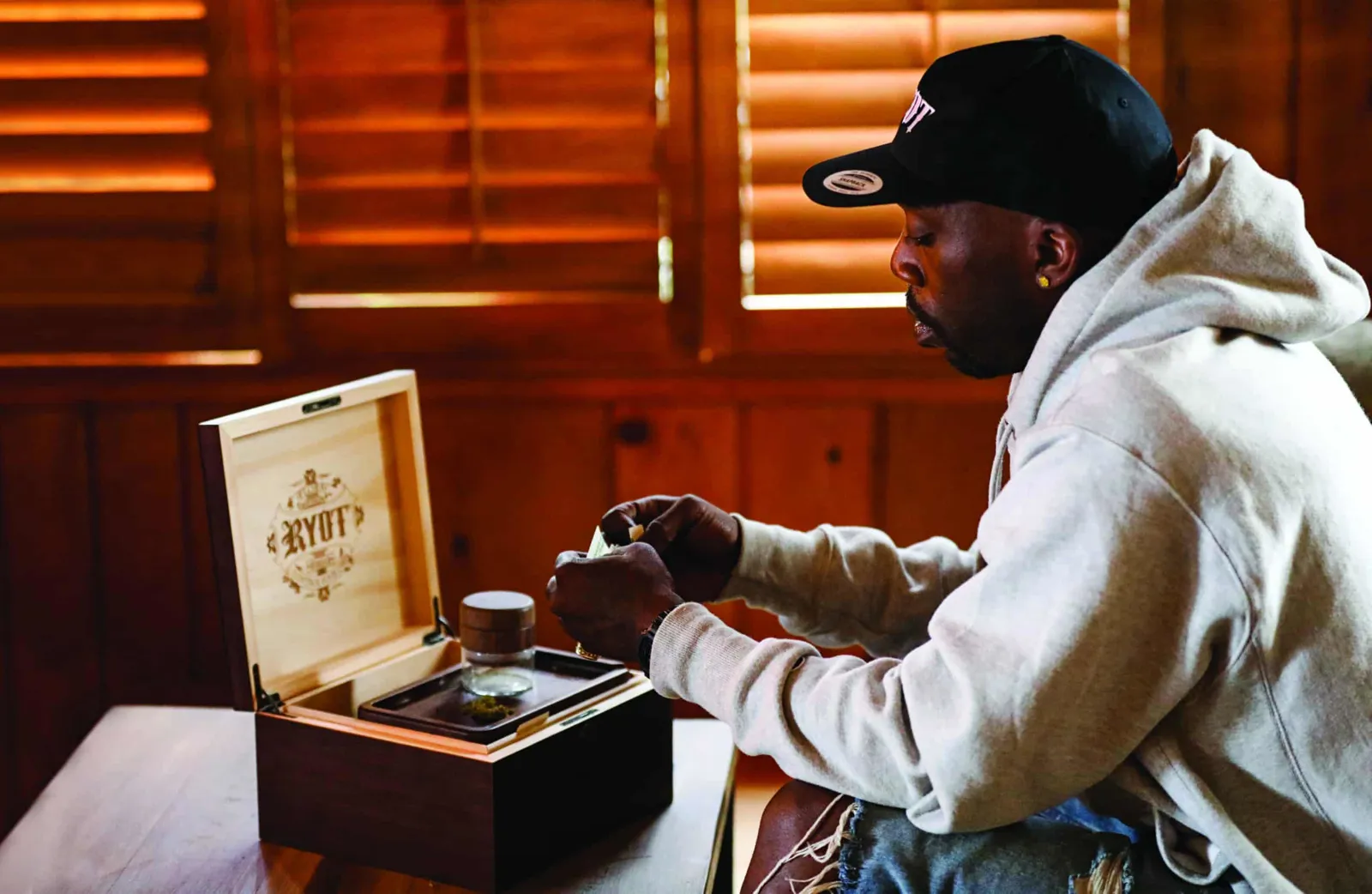
A sealed container with something inside it that gives up moisture when the air is dry and takes it back when the air is damp. That is the whole mechanism. Cigar smokers have used them for a century; the cannabis version is the same object with different dimensions and, usually, a better lock.
The number that matters
Regulators do not measure relative humidity and they do not measure how the bud feels. They measure water activity, written Aw, and California puts a hard line under it: a dried flower sample, pre-rolls included, passes only if water activity does not exceed 0.65 Aw. Fail, and the regulation says the batch "shall not be released for retail sale".
What water activity means
It is not how much water is in the flower. It is how much of that water is available. The regulation defines it as the measure of water in a product that is available and therefore capable of supporting bacteria, yeasts and fungi. Water bound up inside plant tissue does not feed anything. Water free on the surface does.
Moisture content is how wet it is. Water activity is how wet it is to a mould.
Moisture content is not limited
This is the part that surprised us, and it contradicts most of what is written about storing cannabis. The same regulation that sets a hard 0.65 line on water activity requires the laboratory to report moisture content as a percentage and sets no pass mark on it whatsoever. The 5 to 13 per cent range quoted everywhere in this category is not in the rule.
So where did 62 per cent come from
From the humidity packs, and it is a reasonable rule of thumb rather than a law. At equilibrium, 0.65 Aw corresponds to roughly 65 per cent relative humidity, so a 62 per cent pack sits just under the regulatory line and a 72 per cent pack sits well above it. If you have been storing flower at 72 because a cigar forum said so, you are holding it wetter than a laboratory would pass.

What the state tests for
Mould is not a vague worry in this industry; it is a named list. Inhalable cannabis passes microbial testing only if four pathogenic Aspergillus species — A. fumigatus, A. flavus, A. niger and A. terreus — are not detected in one gram. Plus Salmonella, plus Shiga toxin-producing E. coli.
And what nobody tests
Your shelf. Every one of those tests happened to a sample from the batch, before the jar was sealed, weeks or months before you opened it. There is no second test. Whatever the flower does between the dispensary and the last bowl is entirely a function of the container it sat in.
Where the jar actually fails
A screw-top glass jar is genuinely good at being airtight and completely unable to regulate anything. Open it daily in a dry room and it loses moisture every time; leave it in a humid one and it holds whatever got in. A humidor differs in exactly one respect: something inside it is pushing back.
What a year in storage does
Milay and colleagues stored cannabis for twelve months at four temperatures and measured what happened to it. The headline is unambiguous. Whole inflorescences held at 4 °C showed minimal cannabinoid degradation across the entire year. Room temperature, 25 °C, did the most damage of any condition they tested.
Cold beats airtight
That ordering is worth sitting with, because it is the opposite of how this is usually sold. If you had to choose between a beautiful sealed box on a warm shelf and a plain jar somewhere cold, the evidence says take the cold. Best of all is both, which is what a humidor kept somewhere sensible actually is.
Terpenes go first, and fast
The same study found terpenoid concentrations fell rapidly under every storage condition, with most of the loss inside the first four months. No box stops this. The flower you bought in January does not smell in May like it did, and nothing on the market changes that — it only changes how fast.
Do not grind it to store it
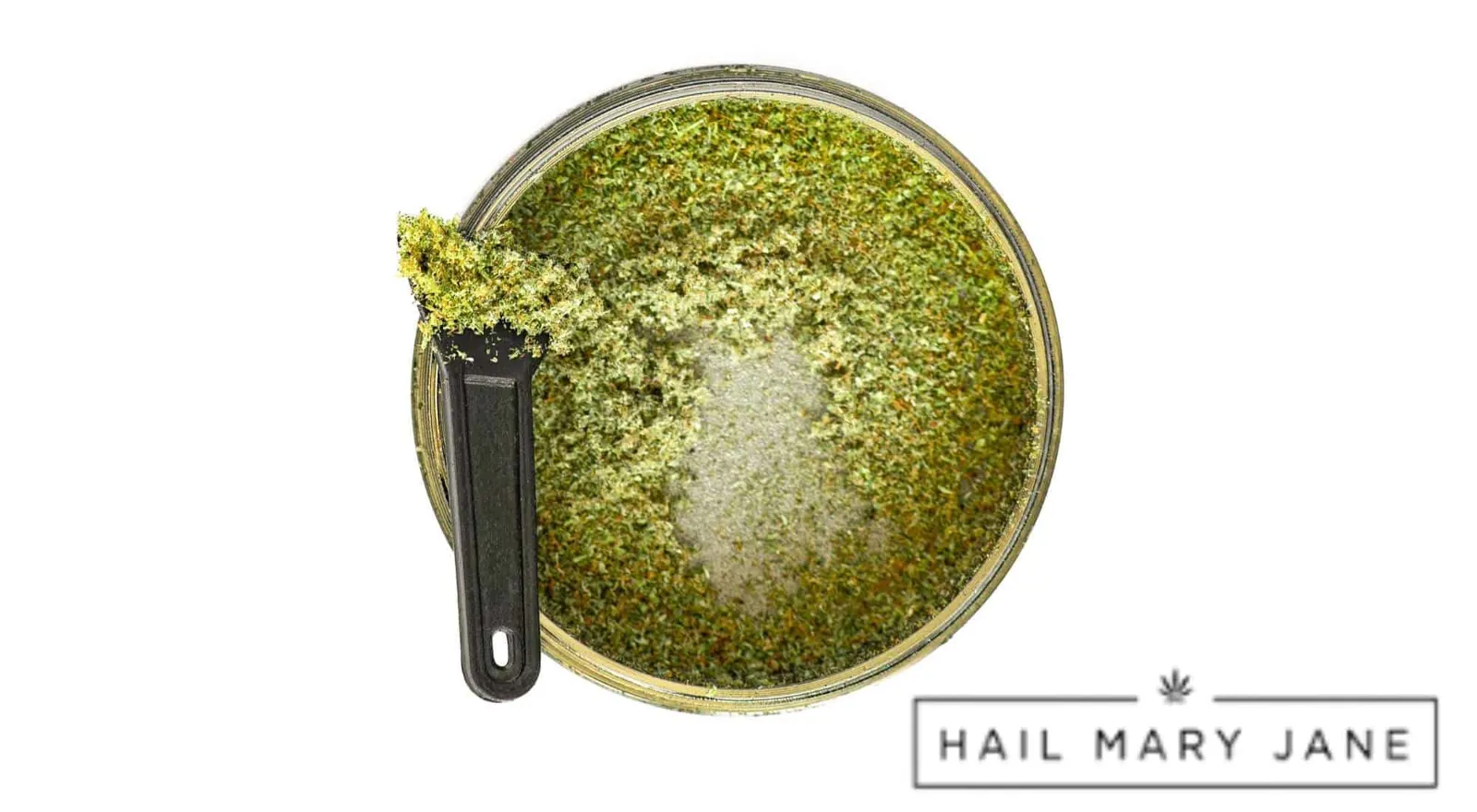
Grinding accelerated terpene loss in the same work. It is obvious once stated — surface area is the enemy — and it is the single cheapest change most people can make. Grind what you are about to use. Store whole bud. Our grinder guide covers getting an even grind when you do.
And do not freeze it either
The counterintuitive one. Storage below −20 °C made terpene losses worse, not better, in the study. Deep freezing is a technique for making concentrate from fresh material, not a way to keep dried flower. A refrigerator is cold enough and a freezer is too much.
Passive packs against active boxes
A passive humidor is a sealed box with a two-way humidity pack in it: cheap, no power, and it works until the pack is spent. An active one has a small electronic humidifier and holds a set point more tightly. For anything short of a very large stash, the passive version is the right answer and the money is better spent on the seal.
Why wood, and why not
Wood is mildly hygroscopic, which is the property the cigar tradition is built on: Spanish cedar buffers humidity and smells of itself. That second part is the problem here. Cannabis terpenes are the reason you chose the strain, and a strongly aromatic wood will contribute its own. Glass and lined boxes give you nothing extra and take nothing away.
Buy the seal, not the box
A lid that actually closes
Everything else is decoration. A hinge that holds the lid down under its own tension beats a lid that merely rests flat, and you can test it by ear: a good one thumps rather than clicks.
Room to breathe
Buy slightly larger than you need. Flower packed tight has poor air circulation and the humidity distributes unevenly, so the middle of a full box behaves differently from the edges.
Somewhere dark
Light degrades cannabinoids and no box fixes a glass jar left on a windowsill. An opaque container in a cupboard beats a beautiful one on display, every time.
Somewhere cool
The study is clear that temperature did more than anything else. A shelf above a radiator undoes a good box; a cool cupboard rescues a mediocre one.
What a humidor will not do
It will not bring dry flower back. Rehydrating something already brittle gets you damp brittle flower and a mould risk, because the water goes onto the surface rather than back into the tissue. It will not raise potency. And it will not hold terpenes indefinitely, because nothing does.
How we would store it
Whole bud, unground, in an opaque airtight container with a two-way pack nearer 62 than 72, kept somewhere cool and dark, opened as little as the habit allows. That is most of the benefit for very little money. The box can be as handsome as you like after that — it is holding one number steady, and the number is the product.

Questions people ask
What humidity should weed be stored at?
Nearer 62 per cent than 72. The figure regulators actually use is water activity rather than relative humidity: California will not release dried flower above 0.65 Aw, which corresponds at equilibrium to roughly 65 per cent RH. A 72 per cent pack therefore holds flower wetter than a laboratory would pass, and a 62 per cent pack sits just under the line.
Is a humidor better than a mason jar?
Only in one respect, and it is the respect that matters. A jar is genuinely airtight and completely passive: it holds whatever humidity was inside when you closed it and loses a little every time you open it. A humidor has something in it pushing back. If you are choosing between a good box on a warm shelf and a plain jar somewhere cool and dark, the storage study says take the cool dark.
Does storing weed properly keep the smell?
It slows the loss rather than stopping it. A year-long study found terpenoid concentrations fell rapidly under every condition tested, with most of the decline inside the first four months, so no container holds aroma indefinitely. Two things measurably make it worse: grinding before storage, and freezing below −20 °C, which accelerated terpene loss rather than slowing it.
Can you fix weed that has dried out?
Not really. Adding moisture back puts water on the surface rather than into the plant tissue, so what you get is damp brittle flower and a mould risk instead of fresh flower. Worth knowing what the risk is in concrete terms: inhalable cannabis passes state microbial testing only if four named pathogenic Aspergillus species are not detected in a gram, and nothing re-tests your jar.
Sources
- California Code of Regulations, Title 4, Division 19, Sec. 15717. Department of Cannabis Control: dried flower passes water activity testing only at or below 0.65 Aw, and moisture content is reported as a percentage with no pass mark. .gov accessed Sep 18, 2026
- California Code of Regulations, Title 4, Division 19, Sec. 15720(c)(3) and Sec. 15000(ttt). Microbial testing for four pathogenic Aspergillus species, and the definition of water activity. .gov accessed Sep 18, 2026
- Milay L, et al. Metabolic Profiling of Cannabis Secondary Metabolites for Evaluation of Optimal Postharvest Storage Conditions. Front Plant Sci. 2020;11:583605. accessed Sep 18, 2026