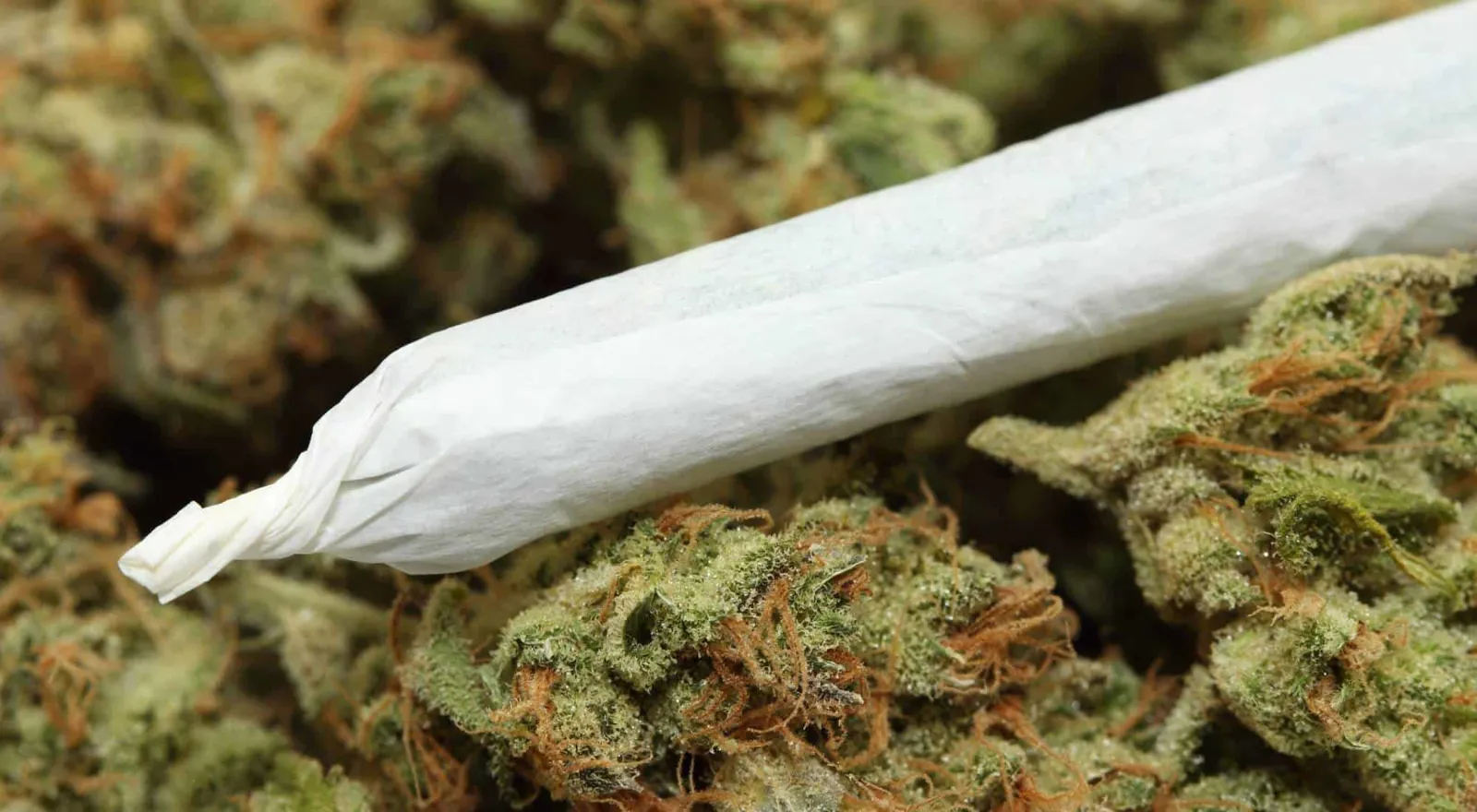
Why a shape changes the burn
A straight joint is a tube of roughly even density. Bend it, branch it or braid it and you create places where the pack is tighter, looser, or where two air paths meet. The ember follows air, so it goes to the loose side and leaves the rest. That is canoeing, and on a shaped joint it is the default rather than the accident.
Airflow is the whole problem
Before rolling anything unusual, work out where the air comes in and where it goes. A shape with two open ends has two fronts burning at different rates. A shape with a sealed branch has a dead leg that will not draw. Almost every failed novelty joint is one of those two.
The cross joint
The famous one, and the most misunderstood. It is not three joints stuck together. It is one main joint with a hole punched through it, a second thinner joint pushed through that hole, and a second hole made in the crossbar so air can travel from both arms into the main body.
Making the holes
A pin or a toothpick, worked slowly, before anything is sealed. The main joint needs a hole all the way through; the crossbar needs a hole through its middle at the point where it meets the main joint, so the arms are not two dead ends. Skipping the second hole is the single most common mistake and it produces a joint that will not draw at all.
Sealing the joins
Gummed strips torn from spare papers, wrapped around the junction and moistened. The seal has to be airtight or the whole thing pulls from the leak instead of from the lit ends. Let it dry fully before lighting; a damp join tears the moment the paper warms.
Why it burns fast
Three lit ends and one mouthpiece. You are burning roughly three times the material per draw, so a cross joint that took twenty minutes to build is gone in a few minutes of smoking. That is the honest trade and it is worth knowing before you commit the flower.
The braided joint
Three thin joints plaited together and joined at both ends. It looks difficult and is mostly patience: the three strands have to be rolled at the same diameter and the same density, or the braid burns down one strand and stops.
Keeping three strands even
Roll all three from the same weighed amount rather than by eye, and roll them slightly looser than you would a single joint, because braiding compresses them. Damp papers are more forgiving to plait and far more likely to tear, so work quickly rather than wetting them more.
The tulip
A cone with a bulb at the end, built by rolling a paper pouch, filling it, and cinching it onto a tube. It holds a lot, it looks good, and it is the shape most likely to collapse, because the bulb is heavy and the joint under it is thin.
Why the cone collapses
Weight and taper. The bulb wants to fall away from the tube and the seal is doing all the work. Support it with a second wrap where the bulb meets the stem, pack the bulb firmly rather than loosely, and expect to hold it upright rather than let it hang.
The paper matters more here
Thin unbleached hemp or rice burns at roughly the rate of the material inside it. Thick or flavoured paper burns faster than the contents, which on a straight joint is a minor annoyance and on a shaped one is what makes an arm run away from the rest. Use the thinnest paper you can handle.
What a crutch does here
The same three jobs as always — it keeps the draw open, stops fragments coming through, and lets you finish the thing — and one more on a shaped joint: it gives the structure something rigid to be built against. It is not a filter, and a spiral of card removes nothing from smoke.
Novelty against smoking it
Be honest about which you are doing. A braid or a tulip is an object you made, and the pleasure is in making it. If the goal is a good smoke, a well-rolled straight joint beats every shape on this page, uses a third of the flower and takes two minutes.
It is still combustion
Whatever shape it is, it burns. Moir and colleagues ran marijuana and tobacco cigarettes on the same machine smoking regimes: ammonia in mainstream marijuana smoke came out at up to twenty times the tobacco figure, with hydrogen cyanide, nitrogen oxides and aromatic amines at three to five times. Reported as measured. If that matters to you, the answer is a vaporizer.
Where to start
Roll a straight joint you are happy with first, because every shape here is that skill repeated under worse conditions. Then try the cross joint, which teaches the airflow lesson faster than anything else. Our pre-rolls guide covers the grind and the density that all of this depends on.
This page used to be two galleries of other people’s photographs. They are gone, and the shapes above want photography of our own: each one built, lit and shot in stages. Until then, the words do the work.

Questions people ask
How do you roll a cross joint?
One main joint with a hole punched right through it, a thinner joint pushed through that hole to form the crossbar, and a second hole through the middle of the crossbar so both arms can draw into the main body. Seal the junctions with gummed strips torn from spare papers and let them dry. Missing that second hole is the usual failure: the arms become dead ends and the joint will not draw.
Why does my shaped joint burn unevenly?
Density, almost always. The ember follows air, so wherever the pack is looser the burn runs ahead and leaves the rest behind. Shapes create those places by design: branches, bends and braids all have points where the pack changes. Thick or flavoured paper makes it worse by burning faster than the material inside it.
Is a cross joint worth it?
As an object, yes; as a smoke, not especially. Three lit ends and one mouthpiece means you burn roughly three times the material per draw, so something that took twenty minutes to build disappears in a few minutes. A well-rolled straight joint uses a third of the flower and smokes better. Build one because building it is the point.
What paper is best for shaped joints?
The thinnest you can handle, in unbleached hemp or rice. Thin paper burns at roughly the rate of the material inside it; thick or flavoured paper burns faster, and on a shaped joint that is what lets one arm run away from the rest. Damp papers plait more easily and tear far more readily, so work quickly rather than wetting them further.
Sources
- Moir D, Rickert WS, Levasseur G, Larose Y, Maertens R, White P, Desjardins S. A comparison of mainstream and sidestream marijuana and tobacco cigarette smoke produced under two machine smoking conditions. Chem Res Toxicol. 2008;21(2):494-502. accessed Sep 18, 2026
- California Code of Regulations, Title 4, Division 19, Sec. 15000(bbb). Department of Cannabis Control: a pre-roll is any combination of flower, shake, leaf or kief rolled in paper. .gov accessed Sep 18, 2026