Why plain tea does not work
This is the part nearly every recipe skips. Cannabinoids dissolve in fat and in alcohol and essentially not at all in water. Pour boiling water over stems, steep for ten minutes and what you have is water that tastes of cannabis. The aroma comes across because terpenes are volatile. The active compounds mostly stay in the plant.
The smell crossing into the water is what convinces people it worked. It is the one part of the plant that would have crossed anyway.
The first missing step
Raw cannabis carries its cannabinoids mostly as acids, and they have to be heated to convert. Wang and colleagues ran extracts at 80, 95, 110, 130 and 145 °C for up to an hour: the conversion follows first-order kinetics and THCA-A converts at about twice the rate of the other acids, cleanly and without by-products.
Why the kettle will not do it
Water boils at 100 °C and a brewing cup sits below that almost immediately. That is inside the range the study tested, but at the cold end of it, where the reaction is slow — and a mug cools while a vacuum oven does not. Steeping is not a substitute for heating the material first.
The second missing step
Fat. Whole milk, cream, coconut oil, butter, or a spoon of something with real fat in it. The cannabinoids leave the plant and travel in the fat, and the fat disperses through the drink. This is why every traditional preparation in this family — bhang above all — is made with milk rather than with water.
What stems are actually worth
Less than the internet suggests, and not nothing. Stems carry far less resin than flower and what they do carry is on the surface. If you have been saving them, they are worth using rather than binning, but expect a weak result and do not scale a recipe as though they were bud.
A method that works
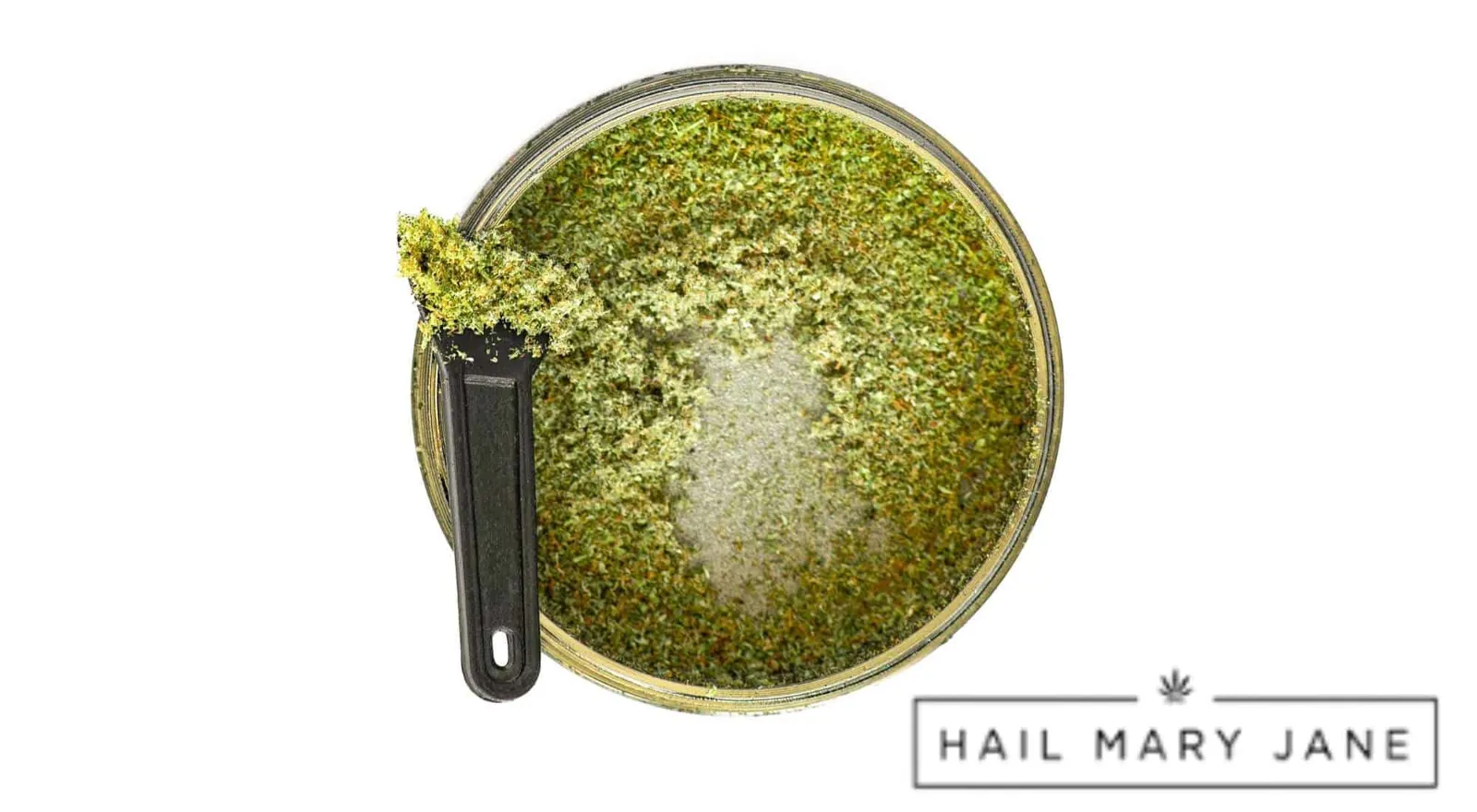
Heat the ground material first. Simmer it gently in whole milk or in water with a spoon of butter or coconut oil, for twenty minutes or so, keeping it below a rolling boil. Strain properly through cloth rather than mesh. Then build the tea on top of that liquid.
Straining, and what it costs
Every method loses some fat to the plant material, and the fat is where the cannabinoids are. Cloth is slower than mesh, clearer, and holds on to more of what you made. Pressing the cloth recovers some of it and also pushes sediment through, which is a taste decision rather than a potency one.
Adding it to a made tea
The simplest version: make an ordinary cup of tea, then stir in a spoonful of an infused butter or oil you already have. It splits the job in two, the infusion is done properly once, and the tea tastes like tea rather than like boiled plant.
You cannot know the strength
Not at home, and this is the honest limit rather than a caution. You do not know what fraction of the acid converted, what fraction crossed into the fat, or what the straining held back. Label it, keep it away from ordinary food, and start far below whatever a calculator suggested.
It arrives slowly
Anything swallowed goes through the gut and the liver before it does anything, so it behaves like an edible rather than like smoke. The practical consequence is the one everybody knows and ignores: the cup you drink because the first one did nothing arrives at the same time as the first one.
What about brands
The old version of this page ranked packaged cannabis teas by price. Those products have largely turned over, the prices were wrong within a year, and a ranked list is not what this site is for. What lasts is the method, which is why the page is now the method.
Chai is the template
Worth noticing that the traditional preparations got there first. Bhang is made with milk and ghee, chai is brewed with milk and often with butter, and both are doing exactly what the chemistry requires without anybody having written down why. If you want a recipe that works, start from one that was already fat-based rather than adding fat to a black tea.
Keeping what you made
An infused milk or butter is a dairy product first and should be handled like one: refrigerated, sealed, labelled clearly, and used within a few days. Labelled matters more than the rest. A jar of unmarked butter in a shared fridge is the single commonest way somebody consumes cannabis without intending to.
Where to start
Whole milk, a small amount of well-ground material, heated first, simmered gently, strained through cloth. Build the tea on that. If it tastes strongly of plant you strained badly; if it does nothing at all, the fat was missing or the heating step was.

Questions people ask
Does cannabis tea actually work?
Only if it is made with fat and with material that was heated first. Cannabinoids are lipophilic and do not dissolve in water, so steeping stems in a mug produces water that smells of cannabis and carries very little else across. Whole milk, cream or a spoon of butter or coconut oil is what the active compounds travel in.
Can you make tea from cannabis stems?
You can, and expect a weak result. Stems carry far less resin than flower and what they hold is mostly on the surface. They are worth using rather than binning if you have been saving them, but do not scale a recipe as though they were bud, and they still need the same two steps: heat first, then fat in the cup.
Do you need to decarboxylate for tea?
Yes, and the kettle will not do it. Raw cannabis carries its cannabinoids mostly as acids, which have to be heated to convert. A published kinetics study tested 80 to 145 °C; a brewing cup sits at the cold end of that and cools from there, so heating the ground material properly beforehand is a separate step rather than something steeping achieves.
How long does cannabis tea take to work?
Like an edible rather than like smoke, because it is swallowed and passes through the gut and the liver first. The practical consequence is the familiar one: the second cup, drunk because the first seemed to do nothing, arrives at the same time as the first. You also cannot know the strength of a home preparation, so start well below what any calculator suggests.
Sources
- Wang M, et al. Decarboxylation Study of Acidic Cannabinoids: A Novel Approach Using Ultra-High-Performance Supercritical Fluid Chromatography/Photodiode Array-Mass Spectrometry. Cannabis Cannabinoid Res. 2016;1(1):262-271. accessed Sep 18, 2026
- California Code of Regulations, Title 4, Division 19, Sec. 15000(h). Department of Cannabis Control: the definition of a cannabis concentrate, which includes butter. .gov accessed Sep 18, 2026