Two products, one name
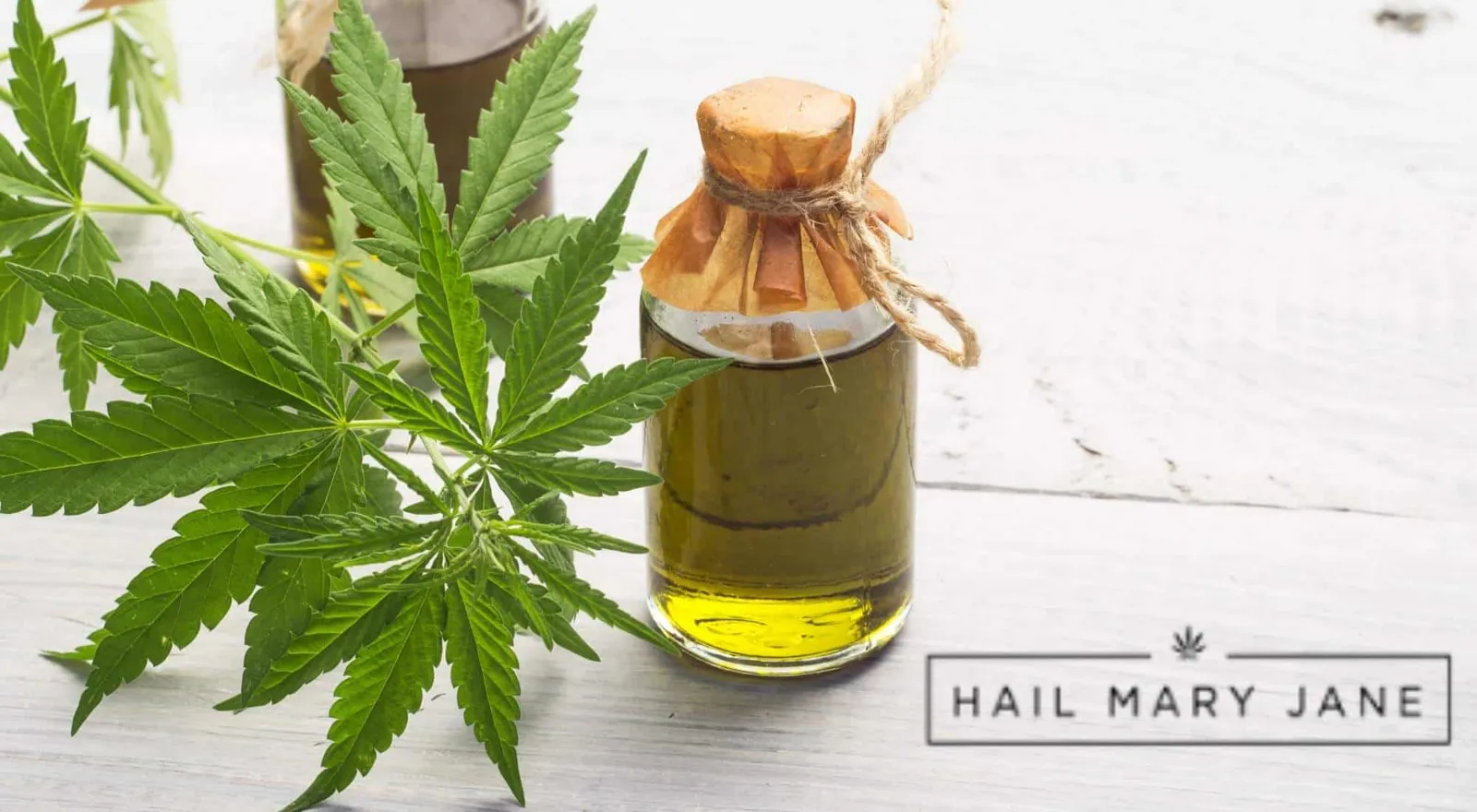
Almost every problem on this topic comes from the word "oil" doing two jobs. Both products say CBD on the front and both are liquids in small bottles, and they are not interchangeable.
| CBD oil, tincture or drops | CBD vape liquid or e-liquid | |
|---|---|---|
| What carries the CBD | MCT oil, hemp seed oil or olive oil | Propylene glycol and vegetable glycerin |
| How it is meant to be used | Under the tongue or swallowed | Heated in a vaporiser and inhaled |
| What the bottle usually has | A dropper | A narrow nozzle for filling a tank |
| What happens if you use the other one | Swallowing vape liquid is not the intended route either, and propylene glycol is not a food carrier | Inhaling an oil puts lipid droplets into the lung |
If a bottle does not say "for inhalation", "e-liquid" or "vape" on it, it is the first column. The absence of the word is the answer.
Why inhaling an oil is serious
Lungs clear water-based aerosols; they do not clear oils the same way. Inhaled lipids can settle in the small airways and provoke an inflammatory response, a pattern described in the medical literature as exogenous lipoid pneumonia. It has been reported after inhaling oil-based substances of several kinds, and it can take weeks to resolve.
This is the one instruction on the page that is not a preference. A tincture in a vape tank is not a weaker or wasteful version of vape liquid; it is a different physical risk, and the symptoms — cough, breathlessness, chest pain, fever — are worth taking to a doctor rather than waiting out.
What the 2019 outbreak taught
In 2019 hospitals across the United States saw a wave of severe lung injury in people who vaped, which came to be called EVALI. The investigation converged quickly: vitamin E acetate, used as a thickening agent in illicit THC cartridges, was found in the lung fluid of the great majority of cases sampled, and was identified as the primary cause.
Two lessons survive from it, and they point in different directions.
- What is added to a cartridge matters more than what is advertised on it. Nobody was buying vitamin E acetate. It was in there because it made a diluted product look thick and potent.
- The source was the informal market. The cases concentrated in cartridges bought outside any regulated channel, which is exactly where CBD carts sold without testing sit.
What is found in CBD e-liquids
This is the finding that belongs on every page about vaping CBD, and appears on almost none of them. Forensic chemists at Virginia Commonwealth University analysed commercially available CBD e-liquids and reported, in Forensic Science International, that products contained the synthetic cannabinoid 5F-ADB and, separately, dextromethorphan — neither declared on the label, and neither anything a buyer had agreed to inhale.
The same group had earlier evaluated CBD e-liquid formulations and found the labelled CBD content frequently did not match what was in the bottle. Taken with the 2017 JAMA analysis of 84 CBD extracts — around seven in ten inaccurately labelled — the picture is consistent: on an unregulated shelf the label is a marketing document, not an ingredient list.
A synthetic cannabinoid is not a strong CBD. Compounds of the 5F-ADB family act at the CB1 receptor far more powerfully than THC does, and they have been linked to severe adverse events. Finding one in something sold as non-intoxicating is the worst-case version of a mislabelling problem.
What the carrier does when heated
Vape liquid is mostly propylene glycol and vegetable glycerin, with flavourings and the active ingredient. Both carriers are widely used elsewhere in food and pharmaceuticals, which is the reassuring half of the sentence.
The other half is what heat does to them. Research published in the New England Journal of Medicine showed that e-cigarette aerosol can carry formaldehyde-releasing compounds, and that the amount rises sharply at higher voltages — the setting people reach for when they want a bigger cloud. Running a device hot is not a neutral choice.
What inhaling changes
| Inhaled | Swallowed | |
|---|---|---|
| Onset | Minutes | Thirty minutes to two hours |
| How much reaches the blood | More, and less of it is destroyed on the way | Less; the liver processes most of it first |
| How long it lasts | Shorter | Longer, spread out |
| How easy it is to judge a dose | Hard: a puff is not a unit | Easier: a capsule or a gummy is a fixed amount |
The speed is the reason people choose it and the reason it is harder to measure. There is no established dose of CBD for any over-the-counter purpose by any route, and inhalation is the route where the amount taken is least knowable.
If you are going to vape it anyway
- Buy vape liquid, not tincture, and check the bottle says so.
- Buy from somewhere that publishes batch certificates, and read one before buying rather than after.
- Avoid anything thick, cloudy or oily in a cartridge. Thickeners are what the 2019 outbreak was about.
- Run the device at the lowest setting that works. Higher voltage produces more degradation products, not more effect.
- Do not buy cartridges from an unofficial channel, which is where the contamination cases concentrated.
Reading a label without being taken in
| What to look for | Why it matters here |
|---|---|
| The words "e-liquid", "vape" or "for inhalation" | The single check that separates the two products in the first table. |
| The carrier listed | Propylene glycol and vegetable glycerin is the vape carrier. MCT or hemp seed oil is not. |
| A batch certificate of analysis | Matching the batch on your bottle, and ideally showing what was tested for and not found, not only the cannabinoid content. |
| Milligrams per bottle and bottle size | The only way to work out roughly what a tankful contains. |
What the hardware is doing
The device is half the product and gets a fraction of the attention. Three parts of it change what reaches you, whatever is in the bottle.
| Part | What it changes |
|---|---|
| The coil and its wick | How much liquid is vaporised per puff, and how evenly. A burnt coil tastes of it and is heating dry wick rather than liquid. |
| The power setting | More power means more vapour and more thermal degradation of the carrier. The research on formaldehyde-releasing compounds is a research finding about voltage, not about vaping in general. |
| Airflow | A tighter draw keeps the vapour cooler and slower; a wide-open one delivers more per second. It is the difference between two devices running the same liquid. |
Practical version: run it at the lowest setting that produces vapour, replace the coil when the taste changes, and keep the device constant if you are trying to work out what the liquid does.
What this page will not tell you
It will not tell you vaping CBD is safe, because the honest position is that inhaling anything is a risk with a short research record, and CBD e-liquid has been on sale for a fraction of the time anyone would want data for.
It will not tell you it is dangerous either. The documented harms on this topic trace to what was added to products — thickeners, undeclared synthetics, contaminants — rather than to CBD itself, which is a problem of supply chains and testing rather than of pharmacology.

Questions people ask
Can I put CBD tincture in a vape pen?
No. Tinctures are carried in MCT or hemp seed oil, which is made to be swallowed. Inhaled oil droplets can settle in the small airways and provoke the inflammatory response described as exogenous lipoid pneumonia.
How do I tell vape liquid from tincture?
Read the carrier. Vape liquid lists propylene glycol and vegetable glycerin and usually says e-liquid, vape or for inhalation on the bottle. A tincture lists an oil and comes with a dropper.
What caused the vaping lung injuries in 2019?
Vitamin E acetate, a thickening agent used in illicit THC cartridges, was found in the lung fluid of the great majority of sampled cases and identified as the primary cause. The cases concentrated in products bought outside regulated channels.
Has anything harmful been found in CBD vape liquids?
Yes. Forensic analysis of commercially available CBD e-liquids reported the synthetic cannabinoid 5F-ADB and, separately, dextromethorphan, neither declared on the label. Buying from a seller that publishes batch certificates is the only practical defence.
Sources
- Blount BC, et al. Vitamin E Acetate in Bronchoalveolar-Lavage Fluid Associated with EVALI. N Engl J Med. 2020;382(8):697-705. accessed Sep 18, 2026
- Outbreak of Lung Injury Associated with the Use of E-Cigarette, or Vaping, Products. Centers for Disease Control and Prevention. .gov accessed Sep 18, 2026
- Poklis JL, Mulder HA, Peace MR. The unexpected identification of the cannabimimetic, 5F-ADB, and dextromethorphan in commercially available cannabidiol e-liquids. Forensic Sci Int. 2019;294:e25-e27. accessed Sep 18, 2026
- Jensen RP, et al. Hidden formaldehyde in e-cigarette aerosols. N Engl J Med. 2015;372(4):392-394. accessed Sep 18, 2026
- Bonn-Miller MO, et al. Labeling Accuracy of Cannabidiol Extracts Sold Online. JAMA. 2017;318(17):1708-1709. accessed Sep 18, 2026