Why it cannot simply dissolve
CBD is lipophilic: it mixes with fats and oils and not with water. That is why every other format carries it in an oil, a fat or a solvent, and it is why a bottle of water with CBD in it needs something done to it first.
What is done is emulsification, usually described on the label as nanoemulsion: the CBD is broken into droplets small enough to stay suspended, with emulsifiers holding them there. It is real technology and it works. It is also the thing that has to keep working, in a bottle, on a shelf, for months.
The smallest dose in the category
| Format | Typical serving |
|---|---|
| CBD water | 2 to 5 mg a bottle |
| Gummy | 10 to 25 mg each |
| Sublingual oil | Adjustable, commonly 10 to 50 mg |
| Capsule | 10 to 50 mg |
| The anxiety trials | 300 to 600 mg in a single dose |
The last row is the context. Nothing about a few milligrams in a bottle of water resembles the amounts that produced measurable effects in the research, by any route.
Light, air and time
Cannabinoids degrade on exposure to light, air and heat — this is why oils are sold in amber glass and why concentrates are kept cool and dark. A clear plastic bottle in a lit chiller cabinet is the opposite of every one of those precautions.
It is also the reason the format attracts the labelling problem twice over: what was put in at the factory and what is in the bottle you picked up are two different questions, and only one of them is on the label.
What the emulsion actually buys
The case for nanoemulsion is that smaller droplets are absorbed more readily than an oil, and that is plausible and is what the technology is for. Whether it delivers meaningfully more than an equivalent oral dose in an oil, in people, is not something the published literature settles.
So the honest position: a reasonable idea, applied to the smallest dose in the category, in the worst packaging for the molecule.
How a swallowed dose behaves anyway
Anything swallowed goes through the gut and the liver before it circulates, and only a fraction arrives. A systematic review of CBD pharmacokinetics puts oral bioavailability low and highly variable between people.
Food changes it more than the format does: in a phase I trial, a high-fat meal raised peak blood concentration around fourteen-fold against the same dose fasted. A bottle of water drunk on an empty stomach is the least favourable version of an already inefficient route.
The regulator has a view on this one
It is worth knowing where CBD drinks sit legally, because it explains a lot about how they are sold. The US Food and Drug Administration has stated that it is unlawful to add cannabidiol to food or beverages in interstate commerce, on the basis that CBD is an approved drug ingredient.
Enforcement has concentrated on companies making health claims rather than on shelves, which is why the products are widely available and why their packaging is so careful about saying nothing. The position is the reason a drink says "hemp extract" and nothing else.
Seltzers, shots and sodas
| Drink | What it usually is |
|---|---|
| CBD water | The smallest doses, and the plainest. |
| Seltzer | The same emulsion with carbonation and flavour. Carbonation does nothing to the cannabinoid. |
| A shot | A smaller volume at a higher dose, usually with botanicals and sometimes caffeine. |
| Cold brew or soda | Caffeine and sugar carrying a few milligrams of CBD. The caffeine is what you will notice. |
What the other ingredients are doing
Almost every drink in this category carries something besides the cannabinoid, and the something is usually more active than the cannabinoid at these amounts.
- Caffeine has a large, immediate, well-characterised effect. If a drink contains it, that is what you are feeling.
- Adaptogens — ashwagandha, rhodiola, L-theanine — each have their own literature, thin but not empty.
- Sugar, which at one drink a day is a real number over a month.
- Melatonin, in the night-time versions, which has a genuine effect on sleep timing.
As everywhere else in this category: a blend that works has not told you which part worked.
What you are paying for
- Water, which is inexpensive.
- A few milligrams of CBD, which at the going rate for bulk extract is a small fraction of the price.
- Processing and packaging, which is most of the rest.
- Convenience, which is genuinely worth something to some people.
The same milligrams in an oil or a capsule cost a great deal less and survive their packaging better. If the appeal is the ritual of a drink, that is a fair reason; it is just not a pharmacological one.
Reading a label on a drink
| What to look for | Why |
|---|---|
| Milligrams per bottle | Stated plainly. Some drinks quote milligrams per serving where a bottle is two servings. |
| A batch certificate | The 2017 JAMA analysis of 84 CBD extracts found around seven in ten inaccurately labelled; a drink has more ways to go wrong than an oil. |
| Opaque or coloured packaging | The one packaging decision that protects the contents. |
| A date | Not a nicety for an emulsion carrying a light-sensitive molecule. |
| What else is in it | Sugars, caffeine and adaptogens all turn up, and all do more than a few milligrams of CBD will. |
Storing it, if you buy it
- Cool and dark, which means not on a windowsill or a desk.
- Drink it soon rather than keeping it for later.
- With food, if you want the most of the little that is in it.
- Do not judge a brand on one bottle that has been under lights for a month.
The comparison brands avoid
| A bottle of CBD water | The same milligrams in oil | |
|---|---|---|
| Dose | 2 to 5 mg | Whatever you measure out |
| Packaging | Clear, on a lit shelf | Amber glass, in a cupboard |
| Stability | An emulsion with a shelf life | An oil that keeps for a year or more |
| Cost per milligram | The highest in the category | Among the lowest |
| Ritual | A cold drink, which is a real pleasure | A dropper, which is not |
Set out like that, the honest case for a CBD drink is the last row. That is a perfectly good reason to buy one; it is simply not the reason the label gives.
What would change this page
A trial comparing a nanoemulsion drink with an equivalent oral dose in oil, measuring blood concentrations in people, would settle the interesting half of the question. Stability testing published per batch — how much CBD is in the bottle after three months on a lit shelf — would settle the other half.
Neither exists publicly. Until they do, the sensible reading is that CBD water is a pleasant drink with a small amount of a fragile ingredient in it.
The products this page covers
Carried across from the earlier version of this page so the formats can be compared side by side. These are not recommendations: we have not tested them, and the details on each need checking against current listings before anyone acts on them.
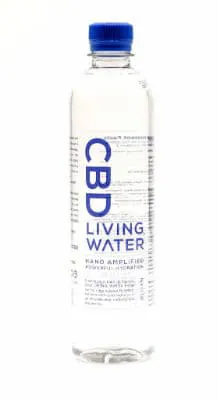
CBD LIVING WATER
CBD Living Water
Budget
- Price Per Bottle
CBD Living Water is a highly bioavailable, naturally infused water created using a nanoemulsion process. Once the water and CBD are infused they add D-ribose for energy, CoQ10 for its antioxidant properties, and methyl B12 for added nutrition and wellness. Even better? Each bottle sits at a perfect pH of 7.4. Check out test results for all CBC Living products here.
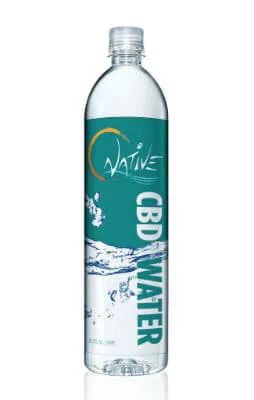
NATIVE CBD WATER
NATIVE CBD Water
Premium
- Price Of 24 Bottles
Native CBD uses a state-of-the-art purification system to ensure they’re combining the world’s cleanest water with nano-emulsified water-soluble CBD. Each bottle contains 5 milligrams of CBD, and it comes in a light citrus flavor. If you’re seeking a pure source of bottled water that only contains CBD and a dash of flavor, this is the perfect product for you. Check out their verified potency reports here.
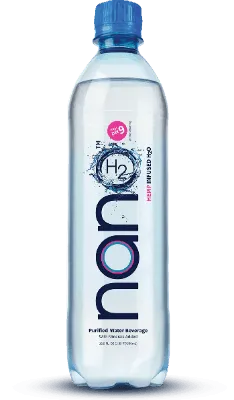
CBD NATURALS WATER
CBD Naturals Water
Budget
- Price Per Bottle
CBD Naturals has two different kinds of CBD water, a Hemp Rain Hemp-Infused Water as well as Nano H20. The Hemp Rain water is infused with potassium, magnesium, and electrolytes to promote overall wellness and healthy muscle growth. The Nano H20 is an alkaline formula infused with vitamins, minerals, and a full-spectrum THC-free CBD oil.
All of these products are made using the nanotechnology mentioned above, so no matter which one you try, you’re going to get practically immediate effects and close to 100% bioavailability with every product. The main factors you’ll have to look into when deciding which products are right for you are based on the added nutrients. If you want pure CBD water with no added supplements, Native CBD is probably more ideal for you. However, if you work out regularly and want something that will help build muscle, CBD Living water is a great option with its CoQ10 content. If you want something that will help with recovery, Hemp Rain CBD Water’s magnesium and electrolytes will keep you hydrated.

Questions people ask
Does CBD dissolve in water?
No. CBD is lipophilic, so it mixes with fats and oils rather than water. CBD water is an emulsion: the CBD is broken into droplets small enough to stay suspended, held there by emulsifiers.
How much CBD is in a bottle?
Typically 2 to 5 mg, which is the smallest serving of any format on sale and a small fraction of the 300 to 600 mg used in the trials that measured anything.
Why does the packaging matter?
Cannabinoids degrade with light, air and heat, which is why oils are sold in amber glass. A clear bottle in a lit chiller is the least protective packaging the molecule could be given.
Is nanoemulsion better absorbed?
Smaller droplets are absorbed more readily in principle, and that is what the technology is for. Whether it delivers meaningfully more than the same dose in an oil, in people, is not settled in the published literature.
Sources
- Millar SA, et al. A Systematic Review on the Pharmacokinetics of Cannabidiol in Humans. Front Pharmacol. 2018;9:1365. accessed Sep 18, 2026
- Taylor L, et al. A Phase I trial of the safety, tolerability and pharmacokinetics of highly purified cannabidiol in healthy subjects, including a food effect arm. CNS Drugs. 2018;32(11):1053-1067. accessed Sep 18, 2026
- Bonn-Miller MO, et al. Labeling Accuracy of Cannabidiol Extracts Sold Online. JAMA. 2017;318(17):1708-1709. accessed Sep 18, 2026