
 CBD for dogs: where the trials are better
The veterinary evidence is stronger than the human evidence. A randomised crossover trial in osteoarthritic dogs found less pain and more activity at 2 mg per kilogram twice daily, and a randomised trial in canine epilepsy found fewer seizures. Both found a liver enzyme rising in some dogs.
CBD for dogs: where the trials are better
The veterinary evidence is stronger than the human evidence. A randomised crossover trial in osteoarthritic dogs found less pain and more activity at 2 mg per kilogram twice daily, and a randomised trial in canine epilepsy found fewer seizures. Both found a liver enzyme rising in some dogs.
CBD · since 2008
CBD: what it is and what it is not
CBD is a cannabinoid that does not get you high. Products differ enormously in what they contain, and the label is often the least reliable part. Start here, then pick a use, a brand or a product type.

Same formula as THC
C21H30O2
Cannabidiol
The cannabinoid that does not get you high. Two rings joined by a single bond, with a pair of hydroxyls and a five-carbon tail hanging off the second one.
Its isomer THC has the identical formula. In THC one of those oxygens has closed onto the other ring and made a third. That single bond is the entire difference between them.
See THC side by sideBrowse
Everything we cover on CBD
CBD Uses
Start here
CBD, explained
CBD is a cannabinoid from the cannabis plant that does not get you high. It is sold as oils, gummies, capsules and topicals, and the products differ enormously in what they actually contain. The label is usually the least reliable part. Start with what CBD is and is not, then pick a use, a brand or a product type.
What CBD is
Cannabidiol is one of more than a hundred cannabinoids the cannabis plant makes. Unlike THC it is not intoxicating, which is why it can be sold openly in places where THC cannot. Most CBD on shelves is extracted from hemp, a legal category of cannabis defined by how little THC it contains.
What CBD is not
It is not a sedative, a painkiller or a treatment for anything, whatever the box implies. Research has examined CBD for a long list of uses; for most of them the studies are small, the doses vary widely and the results are mixed. A claim on a product is a marketing decision, not a research finding. This site describes what has been studied and stops there.
It is also not one thing. A full-spectrum oil, a broad-spectrum gummy and an isolate capsule can all say CBD on the front and contain very different mixtures. Full spectrum keeps the plant's other cannabinoids and terpenes, including a trace of THC. Broad spectrum removes the THC. Isolate is CBD alone.
How to read a label
- Milligrams per serving, not per bottle. The big number on the front is usually the whole container. Divide it by the serving count before you compare anything.
- Spectrum. Full, broad or isolate tells you what else is in there, including whether any THC is.
- A batch certificate of analysis. A lab report that matches the batch code on your container, dated recently, showing what was measured and what was not found.
- The source. Hemp-derived and cannabis-derived CBD are treated differently by the law in most states.
Where to start
Pick the question you actually have. If it is a specific use, the use pages set out what the research has examined, honestly. If it is a product type, the product pages compare formats and what each one costs you. If it is a brand, the reviews say what we found when we used it.
Latest
New in CBD
CBD for dogs: where the trials are better
The veterinary evidence is stronger than the human evidence. A randomised crossover trial in osteoarthritic dogs found less pain and more activity at 2 mg per kilogram twice daily, and a randomised trial in canine epilepsy found fewer seizures. Both found a liver enzyme rising in some dogs.
 CBD and weight loss: what was measured
No randomised trial has shown CBD produces weight loss in humans. The case rests on cell and rodent work about the browning of fat. The one trial that measured metabolic outcomes in people found no change in its CBD arm — the arm that moved was a different cannabinoid.
CBD and weight loss: what was measured
No randomised trial has shown CBD produces weight loss in humans. The case rests on cell and rodent work about the browning of fat. The one trial that measured metabolic outcomes in people found no change in its CBD arm — the arm that moved was a different cannabinoid.
 CBD capsules: the format that measures itself
A capsule is the only CBD format with a dose you cannot misjudge, which makes it the right tool for finding out whether CBD does anything for you. It is also the route that delivers least of what you swallow — unless you take it with a meal, which changes the amount several-fold.
CBD capsules: the format that measures itself
A capsule is the only CBD format with a dose you cannot misjudge, which makes it the right tool for finding out whether CBD does anything for you. It is also the route that delivers least of what you swallow — unless you take it with a meal, which changes the amount several-fold.
 How long do CBD effects last?
Most routes put the useful window somewhere between two and six hours, with wide variation between people and between studies. How long CBD stays detectable in the body is a separate question with a much longer answer, and the two are often confused.
How long do CBD effects last?
Most routes put the useful window somewhere between two and six hours, with wide variation between people and between studies. How long CBD stays detectable in the body is a separate question with a much longer answer, and the two are often confused.
 CBD isolate: what purity costs you
Isolate is CBD with everything else stripped out: no THC, no terpenes, no other cannabinoids. That makes it the only form in which an effect can be attributed to CBD alone, and the form in which a bell-shaped dose curve was demonstrated in mice.
CBD isolate: what purity costs you
Isolate is CBD with everything else stripped out: no THC, no terpenes, no other cannabinoids. That makes it the only form in which an effect can be attributed to CBD alone, and the form in which a bell-shaped dose curve was demonstrated in mice.
 CBD water: the format the chemistry argues with
CBD is not water-soluble, so CBD water is an emulsion held together by processing. The doses are the smallest of any format, and cannabinoids degrade with light and time — which is a problem for a clear bottle sitting under shop lights.
CBD water: the format the chemistry argues with
CBD is not water-soluble, so CBD water is an emulsion held together by processing. The doses are the smallest of any format, and cannabinoids degrade with light and time — which is a problem for a clear bottle sitting under shop lights.
 CBD skincare: what the laboratory found
The case for CBD in skincare rests largely on a 2014 study of human oil-producing cells in culture, which found CBD reduced oil production and inflammatory markers. Nothing since has taken that to a randomised trial on faces, and the rest of the jar is doing work the cannabinoid gets credited for.
CBD skincare: what the laboratory found
The case for CBD in skincare rests largely on a 2014 study of human oil-producing cells in culture, which found CBD reduced oil production and inflammatory markers. Nothing since has taken that to a randomised trial on faces, and the rest of the jar is doing work the cannabinoid gets credited for.
 CBD lip balm: what is actually in it
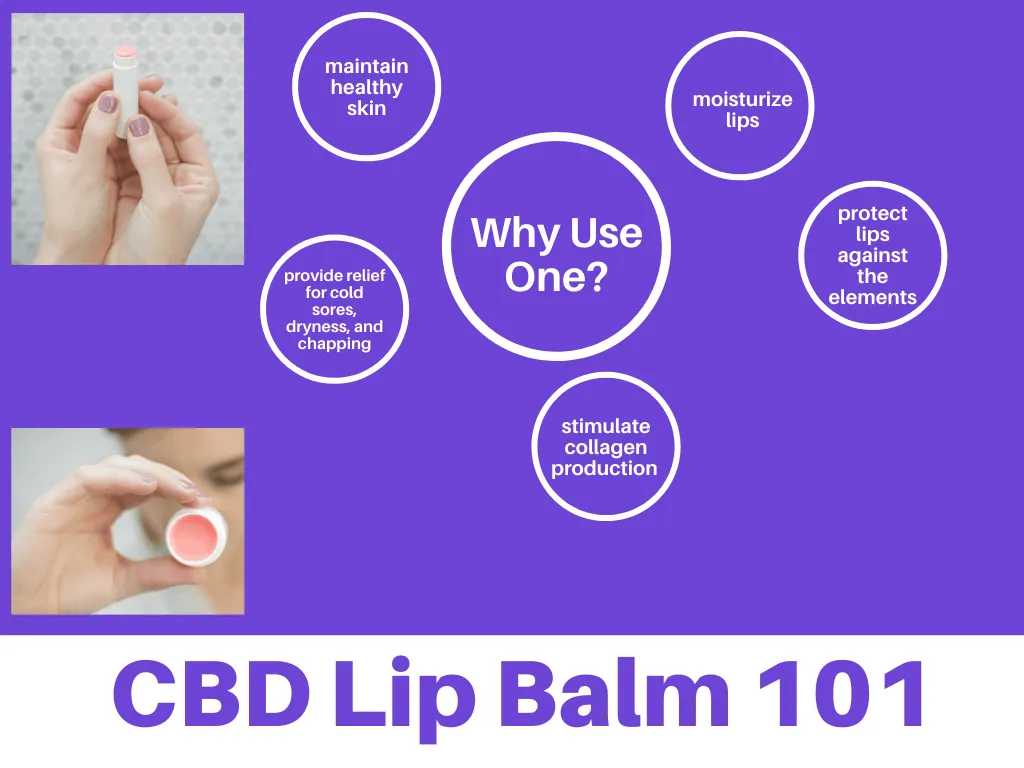
A lip balm works by putting an occlusive layer over skin that has almost no barrier of its own, and beeswax, shea and petrolatum do that. Nothing has tested CBD on lips, so the cannabinoid is the ingredient with the least to say for itself on the tube.
CBD lip balm: what is actually in it
A lip balm works by putting an occlusive layer over skin that has almost no barrier of its own, and beeswax, shea and petrolatum do that. Nothing has tested CBD on lips, so the cannabinoid is the ingredient with the least to say for itself on the tube.
 Hemp oil for hair: seed oil, not CBD
Almost every hemp hair product is hemp seed oil, pressed from seeds and containing essentially no cannabinoids. It is a light, linoleic-acid-rich emollient with a real job to do on hair — which is a different product from the CBD the packaging implies.
Hemp oil for hair: seed oil, not CBD
Almost every hemp hair product is hemp seed oil, pressed from seeds and containing essentially no cannabinoids. It is a light, linoleic-acid-rich emollient with a real job to do on hair — which is a different product from the CBD the packaging implies.